
What Is the Best DME Equipment for Global Buyers in 2026?
Choosing the best dme equipment in 2026 requires more than comparing prices or product catalogs. Global buyers need safe design, dependable documentation, and practical support after delivery. A wheelchair may look excellent online, yet fail in a narrow apartment doorway. A hospital bed may meet technical specifications, but still frustrate caregivers during daily adjustments.
Dr. Steven Landers, a recognized physician and home-care expert, offers a useful principle: “The right care is care that works in the patient’s real life.” This idea should guide every purchasing decision. Buyers should examine weight capacity, battery performance, cleaning requirements, replacement parts, user training, and local service coverage. They should also confirm product quality through recognized certifications and transparent manufacturer records. Small details matter.
Real conditions are rarely perfect. Import duties may change. Repair networks may be limited. User needs can also develop after purchase. That is why responsible sourcing includes contingency planning, not just a good quotation. Buyers should request clear manuals, warranty terms, inspection procedures, and delivery timelines. They should ask difficult questions before payment.
This overview compares leading dme equipment categories for global purchasing teams in 2026. It considers mobility aids, patient-care beds, respiratory devices, and home-accessibility products. The strongest choice is not always the newest model. Sometimes, a simpler device with reliable parts and trained support performs better. That conclusion deserves careful reflection, especially when equipment affects comfort, independence, and everyday safety.
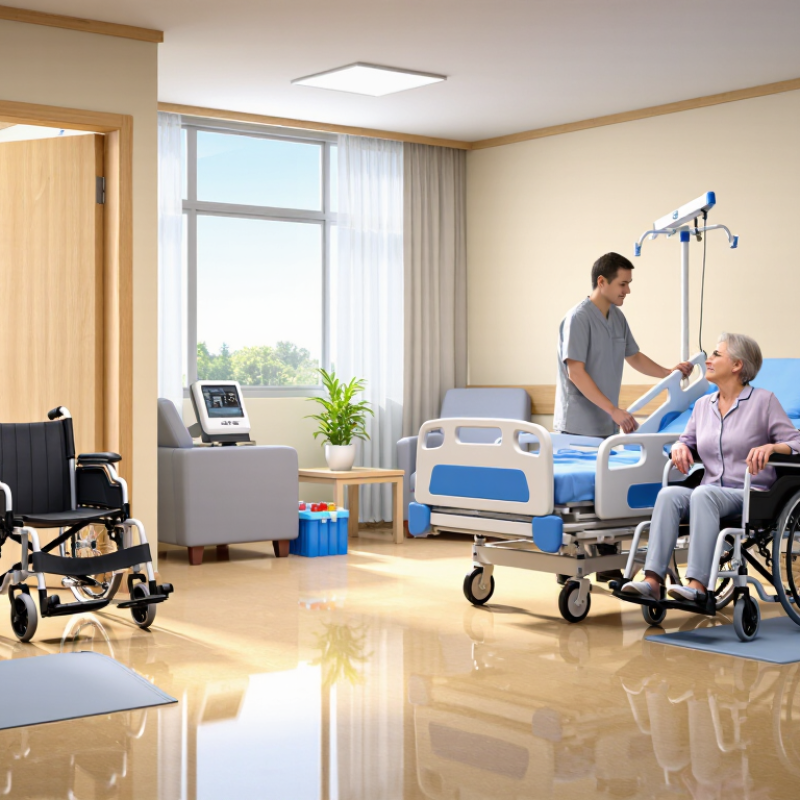
Table of Contents
[Hide]
Definition and Scope of DME Equipment for Global Buyers in 2026
Definition and Scope of DME Equipment for Global Buyers in 2026
Durable medical equipment, or DME, refers to reusable products designed for repeated medical use. These products usually support mobility, daily care, monitoring, treatment, or recovery. Common categories include wheelchairs, patient beds, walking aids, oxygen equipment, suction devices, and home monitoring systems. Unlike disposable supplies, DME should withstand regular handling, cleaning, maintenance, and transport.
The category is not perfectly universal. Definitions differ across national reimbursement systems and procurement rules. The World Health Organization reports more than two million medical device types, grouped into over 7,000 generic categories. This scale makes product classification essential for international buyers. A device may be considered DME in one market but classified differently elsewhere. Buyers should verify intended use, electrical safety, labeling, user training, servicing, and replacement-part availability before purchase.
Demand is also expanding beyond hospitals. The WHO and UNICEF Global Report on Assistive Technology estimates that more than 2.5 billion people need at least one assistive product worldwide. That figure could exceed 3.5 billion by 2050. For 2026 sourcing, practical value matters more than technical novelty. A remote monitoring unit may look advanced, yet poor connectivity can reduce its usefulness in rural clinics. I have seen procurement plans overvalue specifications and undervalue maintenance. That is a costly weakness. Reliable DME should match local infrastructure, caregiver skills, patient needs, and documented quality controls.
What Is the Best DME Equipment for Global Buyers in 2026?
Definition and Scope of DME Equipment for Global Buyers in 2026
| Equipment Category | Primary Use | Typical Technical Range | Portability & Power | Best-Fit Buyer Profile | Global Procurement Considerations | 2026 Buying Priority |
|---|---|---|---|---|---|---|
| Oxygen Concentrators | Long-term oxygen therapy in home and community settings | Common stationary models: approximately 1–10 L/min; oxygen concentration commonly specified at about 90% or higher, depending on flow and model | Usually mains powered; portable models may use rechargeable batteries; weight varies substantially by output and battery configuration | Home-care providers, hospitals, clinics, rental programs, and buyers serving areas with unreliable cylinder supply | Confirm oxygen output, alarm functions, altitude performance, voltage/frequency compatibility, noise level, filters, replacement parts, and applicable medical-device registration | High reliability |
| Manual Wheelchairs | Daily mobility, transfers, rehabilitation, and transport | Typical seat widths: approximately 14–22 in (36–56 cm); common seat depths: approximately 15–20 in (38–51 cm); load capacities often range from about 100–300 lb (45–136 kg) | Folding and rigid-frame options; self-propelled models require upper-body propulsion; transit models are generally lighter and more compact | Hospitals, rehabilitation centers, home-care distributors, humanitarian programs, and public health services | Assess seat dimensions, frame weight, caster size, brake design, corrosion resistance, spare wheels, packaging volume, and accessibility requirements | Best value |
| Powered Wheelchairs & Mobility Scooters | Powered indoor and outdoor mobility for users with limited self-propulsion | Typical travel ranges vary from roughly 10–30 km per charge; maximum user capacity commonly ranges from about 100–200 kg | Rechargeable battery systems; folding, disassemblable, or full-size configurations; outdoor models may require larger turning clearance | Specialist mobility retailers, rehabilitation providers, long-term-care facilities, and individual users | Verify battery shipping classification, charger compatibility, incline rating, ground clearance, weather protection, service training, and replacement battery availability | Service support |
| Hospital & Home-Care Beds | Positioning, nursing care, transfers, and pressure-injury prevention | Common features include adjustable backrest, leg section, bed height, side rails, and casters; mattress platforms are commonly near single-bed dimensions | Manual, semi-electric, or electric; electric versions require mains power and may include a backup lowering function | Hospitals, nursing homes, home-care rental fleets, and discharge-planning programs | Check safe working load, rail configuration, emergency lowering, caster locks, mattress compatibility, cleaning resistance, shipping dimensions, and local electrical standards | Safety first |
| Pressure-Relief Mattresses | Pressure redistribution for users with limited mobility or extended bed rest | Alternating-pressure systems commonly use electrically driven pumps with selectable pressure and cycle settings; static foam systems require no pump | Foam systems are highly portable; powered air systems need mains power and may include low-pressure or power-failure alarms | Home-care providers, hospitals, nursing facilities, and wound-care programs | Match user weight and risk level, confirm cover waterproofing and cleanability, review pump noise, spare-cell availability, and electrical compatibility | Clinical fit |
| CPAP & Non-Invasive Ventilation Devices | Positive-airway-pressure therapy for sleep-disordered breathing and selected respiratory conditions | Therapy pressure is prescribed clinically; devices may include fixed-pressure, auto-adjusting, bilevel, humidification, data recording, and alarm functions | Compact mains-powered units; some configurations support battery operation for travel or emergency use | Sleep clinics, respiratory departments, home-care suppliers, and medically supervised users | Require prescription and clinical setup; verify mask interfaces, humidifier water management, software support, data privacy, voltage, and local registration | Clinical oversight |
| Nebulizers | Aerosol delivery of prescribed respiratory medication | Compressor, ultrasonic, and vibrating-mesh technologies are available; particle-size performance and treatment time vary by design | Compressor models are generally mains powered; mesh and some compact models may use batteries | Pediatric and adult home care, clinics, emergency preparedness, and community health programs | Compare residual medication volume, cleaning process, noise, consumable kits, battery options, infection-control instructions, and voltage compatibility | Ease of maintenance |
| Patient Lifts & Transfer Aids | Safe transfers between beds, chairs, toilets, and other surfaces | Electric or hydraulic lifting mechanisms; typical safe working loads vary widely, commonly from about 100–250 kg | Mobile units require floor clearance and turning space; electric models normally use rechargeable batteries with manual emergency lowering | Hospitals, nursing facilities, home-care agencies, and occupational safety programs | Validate sling compatibility, spreader-bar design, lift range, base width, caster performance, emergency controls, staff training, and inspection procedures | User safety |
| Diagnostic Monitoring Devices | Spot checks or continuous monitoring of vital signs in supervised care | Common measurements include blood pressure, pulse rate, body temperature, and oxygen saturation; accuracy depends on method, sensor fit, and user condition | Battery or rechargeable operation; handheld and tabletop formats are available | Clinics, home-health teams, pharmacies, telehealth programs, and emergency-response services | Review validation evidence, cuff and sensor sizes, calibration intervals, data export, cybersecurity, language support, and local measurement requirements | Accuracy |
| Rehabilitation & Therapy Equipment | Restoration or maintenance of mobility, strength, balance, and daily function | Includes walkers, rollators, transfer benches, therapy steps, exercise pedals, and positioning supports; specifications depend on the intended activity and user capacity | Mostly non-powered and portable; powered therapy systems require dedicated electrical and service arrangements | Rehabilitation hospitals, outpatient clinics, physiotherapy practices, schools, and home-care programs | Prioritize adjustability, anti-slip surfaces, load rating, foldability, cleaning materials, replacement tips and wheels, user instructions, and therapist training | Fit & durability |
Related Posts
-
2026 Best Medical DME Supplies for Global Buyers?
-
How to Choose the Best Medical Supplies for Your Needs?
-

10 General Medical Tips for a Healthier Life
-

10 Best Medical Solutions for Effective Healthcare Management?
-

2026 Best Medical Linens for Healthcare Facilities and Home Use?
-

How to Choose the Best Convalescent Supplies for Recovery?