• Shopping Cart Shopping Cart
    0Shopping Cart
Medical Supply Solutions
  • SERVICES
  • PRODUCTS
    • Durable Medical Equipment
    • General Medical Supplies
    • Incontinence Supplies
  • ABOUT US
  • SALES REPS
  • CONTACT US
  • BLOG
  • Menu Menu
How to Choose the Right Healthcare Equipment for Your Needs?

How to Choose the Right Healthcare Equipment for Your Needs?

Choosing the right healthcare equipment is crucial for both providers and patients. Dr. Emily Turner, a leading expert in medical technology, emphasizes, “The quality and fit of healthcare equipment can directly impact patient outcomes.” With the vast array of products available, making informed decisions is essential.

When selecting healthcare equipment, consider the specific needs of the patients. Factors such as age, mobility, and medical conditions play a significant role. Equipment must be comfortable and easy to use, ensuring that it enhances the quality of life. Each piece of equipment serves a different purpose, from diagnostic tools to mobility aids.

Healthcare professionals often face dilemmas about what equipment to invest in. The choices can be overwhelming, leading to potential pitfalls. It’s vital to evaluate all available options critically. Experts recommend prioritizing quality and reliability over cost alone. In this evolving field, staying updated with the latest innovations can significantly improve care delivery.

How to Choose the Right Healthcare Equipment for Your Needs?
Table of Contents [Hide]
1 Identify Your Specific Healthcare Needs and Objectives
2 Evaluate Different Types of Healthcare Equipment Available
3 Consider Budget and Cost-Effectiveness of Equipment Options
4 Assess the Quality and Reliability of Healthcare Equipment
5 Review Manufacturer Support and Service Options Before Purchase

Identify Your Specific Healthcare Needs and Objectives

How to Choose the Right Healthcare Equipment for Your Needs?

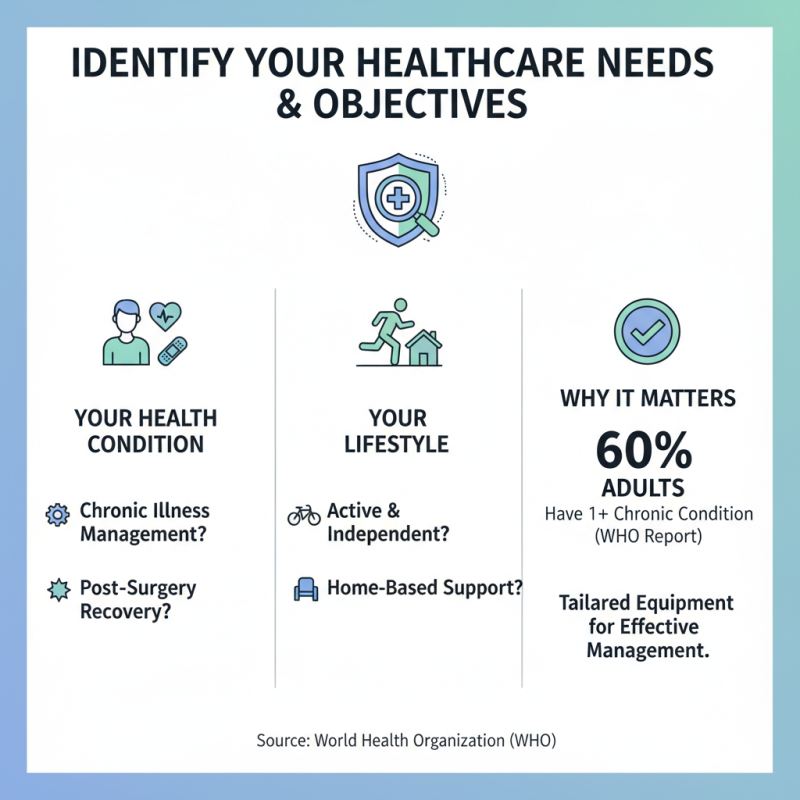
Identifying your specific healthcare needs is the first step in selecting the right equipment. Consider your condition and lifestyle. Are you managing a chronic illness? Or are you recovering from surgery? According to a report by the World Health Organization (WHO), about 60% of adults have at least one chronic condition. This statistic highlights the importance of tailored equipment to manage these health challenges effectively.

Next, assess your objectives. Are you seeking mobility assistance, rehabilitation devices, or monitoring tools? Different equipment serves distinct purposes. For example, mobility aids can enhance independence. A study published in the Journal of Geriatric Rehabilitation found that using mobility aids improved patients' confidence and reduced fall risk by 30%. While it may be tempting to choose the latest technology, remember that not every piece of equipment may suit your individual needs. Reflection on your unique situation will guide you better.

Choosing healthcare equipment is often overwhelming. The options seem endless, and professional advice is crucial. Consulting healthcare professionals can provide clarity. They can help align your needs with practical solutions. Some find it challenging to ask questions or seek help. However, fostering open communication can lead to better outcomes. Aim for equipment that enhances your daily life. The right choices empower you to take charge of your health journey.
Evaluate Different Types of Healthcare Equipment Available

How to Choose the Right Healthcare Equipment for Your Needs?

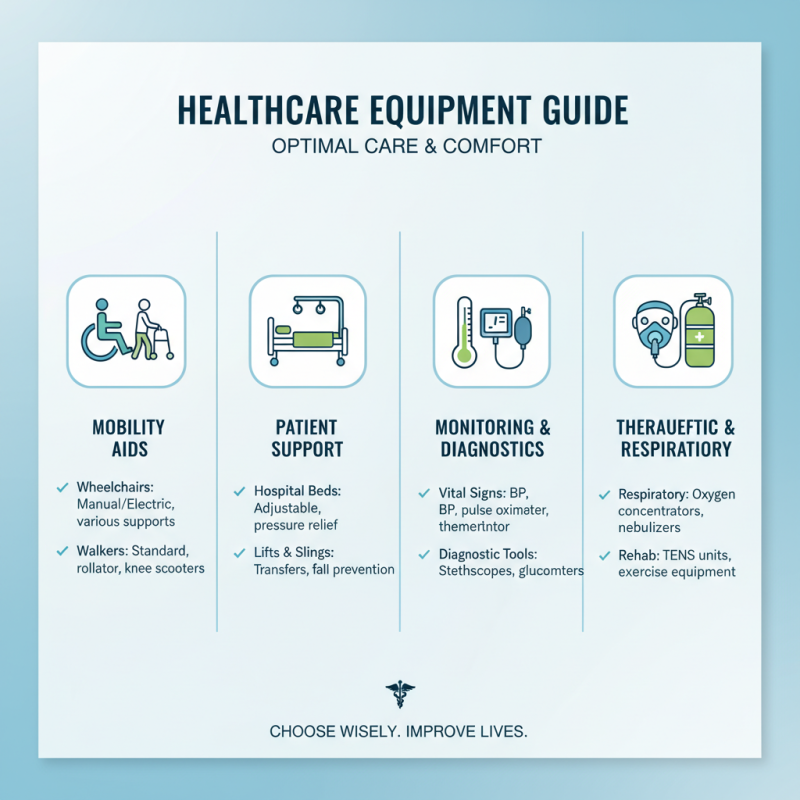
Choosing the right healthcare equipment is crucial for effective treatment and patient comfort. With numerous options available, it's essential to evaluate various types to suit specific needs. For instance, mobility aids like wheelchairs and walkers cater to different levels of physical capability. Understanding the unique features of each item can lead to better decisions.

Consider functionality when selecting equipment. Some devices offer advanced technology, while others provide simplicity. It’s important to assess how these features align with user requirements. High-tech devices may offer greater efficiency but can also be overwhelming for some users. Ensure that the equipment's interface is user-friendly.

Tips: Always seek advice from healthcare professionals. They can guide you in choosing equipment based on medical history. Additionally, assess the available space in your home. Some equipment may require ample space, which can be a limiting factor. Finally, consider budget constraints. While it’s tempting to choose the latest model, prioritize practical utility over trends.

Consider Budget and Cost-Effectiveness of Equipment Options

When selecting healthcare equipment, budget is a critical consideration. According to a 2022 industry report, 70% of healthcare facilities prioritize cost-effectiveness when making purchasing decisions. Understanding your budget can help streamline this process. It's essential to balance quality with affordability.

Many healthcare providers opt for refurbished equipment as a cost-saving measure. A study noted that up to 30% of healthcare budgets can be saved through this approach. However, refurbished items may raise concerns regarding reliability. Ensure that any refurbished equipment comes with warranties and meets strict industry standards.

It's also vital to evaluate long-term costs beyond the initial purchase price. Routine maintenance and energy efficiency can drastically influence total ownership costs. A 2021 analysis found that up to 50% of healthcare expenditure comes from operational costs. Thus, choosing energy-efficient equipment could lead to significant savings over time. Consider consulting with industry professionals to gain insights tailored to your specific needs.

Assess the Quality and Reliability of Healthcare Equipment

When assessing the quality and reliability of healthcare equipment, consider multiple factors. Start with materials. Equipment made from durable materials often holds up under daily use. Look for equipment that can withstand rigorous cleaning and disinfecting. This is crucial in a healthcare setting, where hygiene is paramount.

Certification matters greatly. Seek equipment that complies with industry standards. This ensures safety and reliability. It reflects rigorous testing and adherence to guidelines. Users should also examine warranties. A longer warranty period often indicates confidence in the equipment's longevity. Be cautious of equipment with unclear or minimal warranty details; this may indicate a lack of reliability.

User feedback can provide insight into real-world performance. Look for reviews or testimonials that address longevity and maintenance issues. Sometimes, equipment may not perform as expected under pressure. It’s important to conduct hands-on tests when possible. This allows you to evaluate the functionality before making a final decision. Always remember, not all products will meet your needs perfectly. Reflect on your specific requirements to make an informed choice.

Review Manufacturer Support and Service Options Before Purchase

When selecting healthcare equipment, evaluating manufacturer support is crucial. Manufacturers vary in their service levels. Some provide comprehensive support, while others fall short. Understanding the support options available can save you time and frustration later.

Consider the warranty and service contracts. Are they clear and comprehensive? Some companies offer excellent warranties, while others may limit coverage. This can affect your equipment's longevity and your investment’s value.

Also, think about accessibility. Is customer service reachable? Quick responses are vital after a purchase. Assess if technical support is available when needed. Having reliable support can make a significant difference in your overall experience. It’s essential to weigh these factors attentively.

How to Choose the Right Healthcare Equipment for Your Needs?

Equipment Type Key Features Manufacturer Support Service Options
Patient Monitor Real-time vitals tracking, alarms, and data logging 24/7 technical support, online resources On-site maintenance, warranty options
Mobility Aid Lightweight, foldable, adjustable height Dedicated customer service, instructional videos Repair services, replacement parts
Ventilator Multi-mode ventilation, user-friendly interface Training sessions, hotline support Annual service check, rapid response
Infusion Pump Precision delivery, programmable settings Online troubleshooting guides, prompt email support Field service, loaner equipment availability
Diagnostic Equipment Accurate readings, easy calibration Extensive product manuals, video tutorials Comprehensive servicing plan, loaner units

Related Posts

  • 10 Best Medical Equipment and Supplies for Home Health Care Needs?

    10 Best Medical Equipment and Supplies for Home Health Care Needs?

  • 10 Essential Tips for Choosing Medical Equipment and Supplies?

    10 Essential Tips for Choosing Medical Equipment and Supplies?

  • Top 10 Essential Healthcare Equipment Every Home Needs?

    Top 10 Essential Healthcare Equipment Every Home Needs?

  • How to Choose the Right General Medical Practitioner for Your Needs?

    How to Choose the Right General Medical Practitioner for Your Needs?

  • 2026 Best Handicap Equipment for Enhanced Mobility and Independence?

    2026 Best Handicap Equipment for Enhanced Mobility and Independence?

  • Top Medical Answers to Common Health Questions?

    Top Medical Answers to Common Health Questions?

Blog Tags:

  • medical devices
  • hospital supplies
  • surgical equipment
  • diagnostic tools
  • healthcare technology
  • medical instruments
© 2026 Medical Supply Solutions :: Website by Integritive Web Design :: Asheville, NC
Scroll to top Scroll to top Scroll to top