
• Shopping Cart Shopping Cart
    0Shopping Cart
Medical Supply Solutions
  • SERVICES
  • PRODUCTS
    • Durable Medical Equipment
    • General Medical Supplies
    • Incontinence Supplies
  • ABOUT US
  • SALES REPS
  • CONTACT US
  • BLOG
  • Menu Menu
What Is a Lumbar Traction Table and How Does It Work?

What Is a Lumbar Traction Table and How Does It Work?

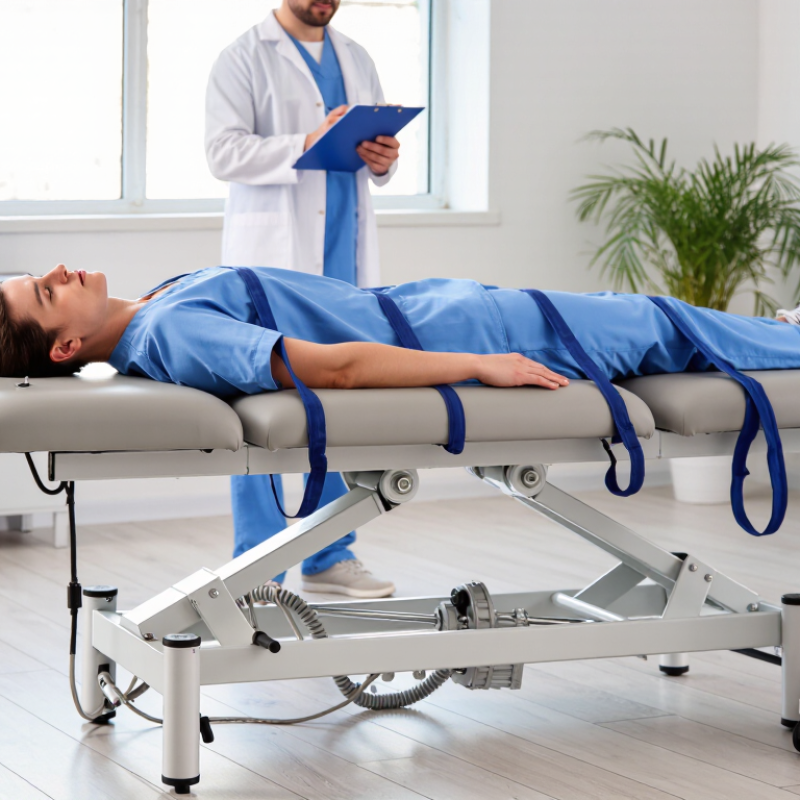
A Lumbar Traction Table is a clinical device designed to apply controlled pulling forces to the lower spine. It usually uses a padded surface, adjustable straps, and a motorized or manual system. During treatment, the table separates gently at the waist. This movement may reduce compressive pressure and create temporary space between lumbar vertebrae.

The experience can feel unusual.

Some patients describe a slow, steady stretch. Others notice mild relief around the lower back or legs. However, traction does not work identically for everyone. Its effect may depend on the diagnosis, treatment position, force level, and individual tolerance. A trained healthcare professional should assess these factors before using the equipment.

Dr. James M. Cox, a chiropractor associated with flexion-distraction therapy, is often linked with this practical principle: “The patient’s response guides the treatment.” That idea remains important when discussing a Lumbar Traction Table. Comfort, symptom changes, and neurological findings should influence each session. More pulling is not automatically better.

Clinical evidence is mixed. Some people may experience short-term relief, while others may notice little change. Traction should not be presented as a guaranteed cure or a replacement for medical evaluation. Persistent numbness, weakness, bowel changes, or bladder problems require prompt professional attention.

This article explains what a Lumbar Traction Table is, how its mechanical action works, and where it may fit within responsible back-care planning. The technology looks straightforward. Its safe application is not.
What Is a Lumbar Traction Table and How Does It Work?
Table of Contents [Hide]
1 What Is a Lumbar Traction Table?
2 How Lumbar Traction Tables Apply Spinal Decompression
3 Key Components and Operating Mechanisms
4 Common Uses and Potential Benefits
5 Safety Considerations and Treatment Limitations

What Is a Lumbar Traction Table?

A lumbar traction table is a clinical device designed to gently separate the lower spinal segments. It usually has a divided surface for the upper body and pelvis. The pelvic section can move away from the fixed upper section. This movement creates a controlled pulling force along the lumbar spine.

A trained healthcare professional adjusts the table according to the patient’s condition. Settings may include traction force, treatment duration, movement speed, and release intervals. Some tables apply steady traction. Others use repeated cycles of pulling and relaxation. The patient normally lies face up or face down, while padded straps support the pelvis. The aim is not to stretch as strongly as possible. Controlled positioning matters more.

Comfort varies. Some patients notice a mild lengthening sensation. Others feel pressure around the hips or abdomen. That difference is important. A table should not cause sharp pain, numbness, or worsening leg symptoms. Clinicians should review medical history before treatment, especially after spinal surgery, with fractures, severe osteoporosis, or unexplained neurological changes. The equipment cannot identify the cause of back pain by itself. That is an easy detail to overlook. Proper assessment, careful adjustment, and ongoing observation remain essential during each session.

How Lumbar Traction Tables Apply Spinal Decompression

A lumbar traction table gently separates portions of the lower spine through controlled pulling. The patient usually lies on their back, with a padded harness supporting the pelvis. A clinician then selects the force, duration, and rhythm according to the person’s symptoms and examination.

The table may use steady or intermittent traction. During each cycle, the lower body moves slightly away from the upper body. This can reduce compressive loading temporarily and create more space between spinal structures. Some patients notice a mild stretch across the waist. Others feel little change. That difference matters.

The word decompression can sound more precise than the evidence allows. Traction does not permanently reposition every disc, and it cannot replace medical diagnosis. In practice, clinicians often combine it with movement training, manual therapy, and education. The treatment should never feel sharp, numb, or alarming. Those signs require reassessment.

A careful provider checks strength, sensation, reflexes, medical history, and red-flag symptoms before treatment. Certain conditions may make traction unsuitable, including unstable spinal problems, recent fractures, or severe neurological changes. When appropriately selected, a lumbar traction table can be one measured tool for managing some lower-back conditions, not a guaranteed cure.

What Is a Lumbar Traction Table and How Does It Work? - How Lumbar Traction Tables Apply Spinal Decompression

Dimension Feature or Parameter How It Works or What It Means Important Consideration
Basic Definition Lumbar traction table A treatment table designed to apply a controlled pulling force along the length of the lumbar spine. The patient usually lies supine, while the pelvis is stabilized and the lower section of the table moves or separates. It is a therapeutic device, not a stand-alone diagnosis or cure.
Main Objective Reduce mechanical loading Traction aims to temporarily reduce compressive loading and create a gentle longitudinal stretching force through the lumbar region and surrounding soft tissues. Effects can vary substantially between individuals.
Patient Position Supine positioning The patient commonly lies on the back with the trunk supported. The knees may be positioned straight or bent, depending on comfort, the treatment goal, and the clinician’s protocol. Positioning should be adjusted to avoid increased leg or back symptoms.
Pelvic Stabilization Pelvic harness or support A padded pelvic belt or similar support helps transfer traction force to the pelvis while the upper body remains relatively stable. The harness should be secure but not excessively tight or painful.
Table Movement Split-table separation Many mechanical systems use a stationary upper section and a movable lower section. The lower section moves away from the upper section to apply a controlled traction force. Table movement is generally gradual and should be stopped if symptoms worsen.
Force Delivery Static traction A relatively steady pulling force is maintained for a selected period. This approach provides sustained stretching without repeated changes in force. The appropriate force is determined by the clinician rather than by a universal setting.
Force Delivery Intermittent traction The pulling force alternates between higher and lower levels, or between traction and relaxation phases. This may improve comfort for some patients. There is no single intermittent cycle proven to be best for every condition.
Force Measurement Force in pounds or kilograms Mechanical traction devices commonly display the applied force in pounds-force or kilograms-force. Settings are selected according to body size, symptoms, treatment goals, and clinical judgment. A higher force is not automatically more effective or safer.
Treatment Duration Short treatment sessions A session may last several minutes to approximately half an hour, depending on the device, protocol, patient tolerance, and response to treatment. Duration should be individualized and increased only when well tolerated.
Spinal Effect Temporary unloading Traction may temporarily change spinal loading and reduce pressure-related discomfort in some patients. Any increase in intervertebral space is generally modest and may not persist after treatment. Temporary symptom relief does not necessarily indicate structural healing.
Soft-Tissue Effect Gentle stretching The force may stretch muscles, ligaments, joint capsules, and other tissues around the lumbar spine. Relaxation of protective muscle guarding may contribute to comfort. Stretching should feel controlled, not sharp or forceful.
Common Clinical Uses Selected mechanical low-back conditions Clinicians may consider traction as part of a broader plan for selected cases of low-back pain, radiating leg pain, or suspected nerve-root irritation when the patient appears likely to benefit. Exercise, education, activity modification, and other care may also be needed.
Evidence Mixed clinical results Research findings are mixed. Some patients report short-term symptom improvement, while evidence does not consistently show that lumbar traction provides superior long-term outcomes for all forms of low-back pain. Treatment should be reassessed if meaningful improvement does not occur.
Expected Sensation Mild, controlled pulling Patients may feel a gentle stretch or reduced pressure in the lower back. Mild muscle soreness can occur, but severe pain, increasing numbness, or worsening weakness is not an expected treatment response. Report unusual or worsening symptoms immediately.
Potential Benefits Symptom modulation Possible benefits include temporary reduction in pain, decreased muscle tightness, improved tolerance for movement, and easier participation in rehabilitation exercises. Benefits are not guaranteed and may be short-lived.
Potential Risks Symptom aggravation Possible adverse effects include increased back pain, muscle spasm, soreness, skin irritation from the harness, or worsening leg symptoms. Stop treatment and seek clinical advice if neurological symptoms worsen.
Contraindication Examples Conditions requiring avoidance or medical clearance Examples may include spinal fracture or instability, suspected spinal infection or cancer, severe osteoporosis, uncontrolled inflammatory disease, recent spinal surgery, significant vascular disease, or progressive neurological loss. A qualified healthcare professional should screen for safety before use.
Clinical Monitoring Response during and after treatment The clinician monitors pain intensity, leg symptoms, numbness, strength, comfort, blood pressure when relevant, and the patient’s response after the table returns to its normal position. Symptoms should be documented across sessions.
Best-Practice Use Part of a comprehensive plan Lumbar traction is generally most useful when integrated with appropriate assessment, active exercise, posture and movement education, and a gradual return to normal activity. Passive treatment should not replace appropriate active rehabilitation.

Safety note: The information in this table is educational and does not replace an examination or individualized advice from a qualified healthcare professional.

Key Components and Operating Mechanisms

What Is a Lumbar Traction Table and How Does It Work?

A lumbar traction table uses controlled pulling to reduce pressure around the lower spine. Its main structure includes a firm, padded surface and a movable pelvic section. The patient usually lies face up, with knees supported and the lower body secured by a pelvic harness. A second strap may stabilize the upper body. Padding matters because uneven pressure can cause discomfort quickly.

The operating system controls force, duration, speed, and release intervals. During traction, the motor gently separates the table sections along the lumbar direction. This movement creates a measured stretching force rather than a sudden pull. Some tables provide static traction, while others alternate tension and relaxation. A trained clinician adjusts the settings after checking symptoms, posture, and tolerance. Small changes in hip angle can alter the pulling sensation.

In practice, comfort is not a minor detail. The clinician should monitor pain, numbness, dizziness, and muscle guarding throughout the session. The process is not perfectly predictable. That uncertainty matters. Traction may feel relieving for some patients, yet irritating for others. A careful assessment is essential before treatment, especially when spinal injury, severe osteoporosis, infection, or unexplained neurological symptoms may be present. Regular equipment inspection also matters, including harness condition, emergency release controls, and motor performance. A table can be technically advanced, but poor positioning still reduces its value.

Common Uses and Potential Benefits

A lumbar traction table gently lengthens the lower spine while a patient lies securely on a padded surface. A clinician adjusts the pulling force, duration, and angle. The aim is to reduce pressure around irritated joints, discs, or nerve roots. Some people describe a mild stretch, while others feel temporary relief in the legs or lower back.

Its common uses include short-term management of radiating pain, stiffness, and restricted movement. However, the potential benefits require careful interpretation. The World Health Organization reported that low back pain affected about 619 million people worldwide in 2020. Yet, a Cochrane review covering 32 studies and 2,762 participants found little evidence that traction improves pain or daily function for many patients. The evidence is uneven. Some studies are small, and individual responses vary. That uncertainty matters.

Tips: Ask for a clinical assessment before treatment. Mention numbness, weakness, osteoporosis, recent surgery, or unexplained weight loss. Stop if symptoms worsen, spread, or feel sharp. Track changes after each session, including walking distance and sleep quality. A table is not a cure. It may work better alongside exercise, education, and gradual strength training. Personal experience can be useful, but it should not replace guideline-based care.

Lumbar Traction Table: Typical Treatment Session Ranges

A lumbar traction table gently separates the lower spinal segments through controlled pulling and relaxation cycles. Supervised sessions commonly last about 15–30 minutes, although the exact duration depends on the condition, traction method, and clinical protocol.

Traction may be used as part of care for conditions such as radiating low-back pain, suspected nerve-root irritation, and some disc-related disorders. Potential benefits include short-term symptom relief and improved tolerance for movement, but results vary and traction is not appropriate for everyone.

The ranges shown represent commonly reported clinical protocol durations, not individual treatment advice.

Safety Considerations and Treatment Limitations

A lumbar traction table gently separates the spine through a controlled pulling force. The patient usually lies on a padded surface while a pelvic harness supports the lower body. The table may move in cycles, creating tension and release around the lumbar region. Some patients describe a mild stretching feeling. Others notice pressure around the hips or abdomen.

Safety screening matters more than the machine itself. A qualified clinician should review medical history, imaging, symptoms, and current medicines before treatment. Traction may be unsuitable for spinal fractures, severe osteoporosis, infection, cancer, major instability, or suspected cauda equina syndrome. Pregnancy and recent surgery also require careful medical advice.

Stop immediately if pain spreads, numbness increases, weakness appears, or dizziness develops. Skin pressure and harness discomfort should not be ignored.

Treatment results vary. Some people report short-term relief, but traction does not repair every disc problem or correct the underlying cause. Research findings remain mixed. A sensible plan uses low force at first, checks symptoms during treatment, and records changes afterward. More force is not automatically better. That assumption can be unsafe. Traction should support a broader program, often including movement training and education. If symptoms worsen after several sessions, the plan deserves review rather than simple repetition. A table cannot replace a careful diagnosis.

Article Source:

  • Traction Table
  • Lumbar Traction Table
© 2026 Medical Supply Solutions :: Website by Integritive Web Design :: Asheville, NC
Scroll to top Scroll to top Scroll to top