Top 10 Brushless Motor Manufacturers for Global Buyers
Choosing among the Top 10 brushless motor Manufacturers for Global Buyers is not simply a search for the highest speed or lowest price. A brushless motor must fit the real task: turning a small fan, moving a warehouse robot, or powering equipment through long operating shifts. Buyers should compare torque and speed curves, efficiency across the working range, thermal limits, control compatibility, and documented testing. Details matter. A connector that does not match, or a motor that overheats inside a sealed housing, can turn a promising sample into a costly redesign.
Electric-machine scholar Thomas A. Lipo’s work offers a useful buying principle: “Match the motor to the duty cycle, not the brochure.” This is a practical summary, not a verified verbatim quotation. It points buyers toward application data and engineering support rather than headline specifications alone. The manufacturers in this guide are considered through factors such as product range, customization, quality processes, communication, and support for international customers. No list can replace testing a motor in its intended assembly. Supplier claims deserve scrutiny, too. Sometimes the available evidence is incomplete.
Global purchasing adds another layer. Ask how a supplier handles sample builds, traceability, lead times, and technical questions across time zones. Request the relevant test reports and clarify what changes require renewed validation. A polished catalog helps, but it is not proof of a dependable supply relationship. The comparisons ahead aim to help buyers ask sharper questions, spot trade-offs, and shortlist manufacturers suited to their needs. One caveat remains: the “best” supplier may be the one that explains its limits clearly.
Brushless Motor Types and Their Main Industrial Applications
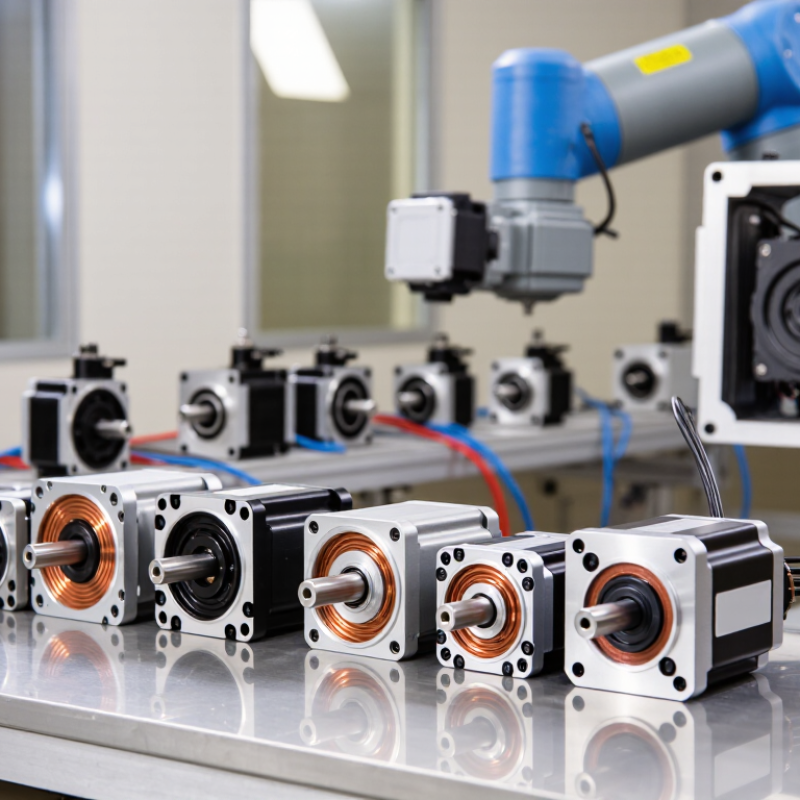
Brushless motors are not one uniform category. Inrunner designs place the rotor inside the stator, often supporting higher speeds in compact machinery. Outrunner designs place the rotor outside, which can provide useful torque at lower speeds. Both rely on electronic controllers rather than brushes and mechanical commutation. Control settings matter.
Permanent-magnet synchronous motors are common in servo systems, packaging equipment, and precision machine tools. Their quick response helps axes stop accurately beside sensors or workpieces. Brushless DC motors also serve conveyors, pumps, fans, and automated assembly stations. A small pump may prioritize steady operation, while a robotic joint needs precise speed and position control. Heat matters.
Motor selection should consider load, speed range, duty cycle, cooling, and the controller’s compatibility. In dusty production areas, enclosure protection and maintenance access deserve attention. For example, a motor running continuously beside a warm oven faces a different thermal challenge than one operating intermittently on a conveyor. Higher efficiency can reduce operating losses, but it does not automatically make a motor the best fit. Specifications can look tidy on paper; real loads are less predictable. Testing under representative conditions is often worthwhile.
Criteria for Assessing Brushless Motor Manufacturers
Assess brushless motor manufacturers against your actual duty cycle, not headline efficiency. Request torque-speed curves, efficiency maps, winding temperature limits, and test conditions. A motor rated for a short peak may struggle during a long, low-speed run. Check whether the supplier tests the motor with the intended controller, since control settings can affect measured performance.
The International Energy Agency’s 2011 report, Energy-Efficiency Policy Opportunities for Electric Motor-Driven Systems, estimates that motor-driven systems use about 45% of global electricity. This figure covers motor systems broadly, not brushless motors alone. It shows why small efficiency differences deserve careful review. Ask for repeatable test results, production quality checks, and clear tolerances—not just a polished specification sheet. Also assess bearing life, sensor options, documentation, and access to replacement parts. A neat catalogue is not proof of consistent production; that distinction is easy to overlook.
Tips: Send suppliers the same load profile, ambient temperature, and operating hours. Compare their answers side by side. Check a physical sample under your real load if possible. One detail may still be missed, so record assumptions before approval.
Top 10 Brushless Motor Manufacturers and Their Profiles
Top 10 Brushless Motor Manufacturers and Their Profiles
A useful top-ten comparison looks beyond catalog size. It examines motor type, production scale, control support, and testing evidence. The profiles below describe capability groups, not named companies. Automotive traction specialists build motors for high torque and repeated thermal stress. Industrial servo makers focus on precise speed control. HVAC and pump suppliers prioritize quiet operation and efficient, steady duty. Power-tool and appliance producers need compact designs that tolerate frequent starts. Medical-device suppliers emphasize smooth motion and traceable quality checks. Robotics makers value rapid response and low rotor inertia. Marine, outdoor-equipment, and custom OEM specialists adapt designs to harsh conditions or tight installation spaces. These distinctions matter on a factory floor.
Demand is growing, but market size alone cannot rank suppliers. The IEA’s Global EV Outlook 2024 reports that electric car sales reached nearly 14 million in 2023, about 18% of global car sales. That expansion supports demand for traction motors, though it does not prove any maker’s quality. Buyers should request efficiency curves, temperature-rise data, bearing-life assumptions, and sample test records. Check whether the quoted rating matches the actual load cycle. Small details count. A supplier may offer excellent hardware yet provide weak documentation. That should prompt questions, not an automatic rejection. Rankings remain partly subjective; a capable supplier for a ventilation fan may be the wrong fit for a high-speed robotic joint.
Comparing Manufacturers by Product Range and Global Reach
A useful comparison of brushless motor manufacturers starts with product range. Some suppliers focus on compact motors for fans, pumps, and small appliances. Others offer larger units for automation, mobility, or industrial equipment. Check available frame sizes, voltage options, speed ranges, and control compatibility. A broad catalogue can simplify sourcing, but it does not guarantee a suitable design.
Global reach is more than a map of sales offices. Ask where products are manufactured, how regional inventory is handled, and whether technical support is available in your time zone. A nearby service team can help resolve questions about wiring, mounting, or operating conditions. Delivery estimates deserve careful checking. They can change.
The strongest candidates provide clear datasheets, practical selection guidance, and consistent answers across sales and engineering teams. Compare sample lead times, customization limits, and documentation quality before committing to a large order. For example, confirm shaft dimensions and connector details against your equipment drawings. Small mismatches cause real delays. A wider product range may reduce redesign work, while a focused supplier may offer deeper expertise in one application. Neither advantage is automatic. Ask for evidence that fits your project, and keep room to revise early assumptions.
Key Sourcing Factors for Global Brushless Motor Buyers
For global buyers, a brushless motor’s nameplate is only a starting point. Match continuous and peak torque to the real load, then check the speed range, duty cycle, and starting conditions. IEA’s Global EV Outlook 2024 reports nearly 14 million electric cars were sold in 2023, about 18% of global car sales. That growth signals expanding demand for electric drives, but it does not guarantee that every supplier can meet your application’s needs.
Request test data at the operating temperature, not just a room-temperature efficiency figure. Review winding insulation, bearing life, magnet grade, encoder accuracy, ingress protection, and vibration results. Ask how the supplier handles batch traceability and replacement parts. Fit first. A sample run can expose noise or overheating that a polished datasheet may miss. IEC 60034 methods can help buyers compare motor performance, but confirm which tests and conditions the supplier actually used.
Lead times deserve equal scrutiny. Confirm production capacity, customization limits, and whether quoted delivery includes testing and inspection. For international shipments, clarify packaging, documentation, and service arrangements before placing a large order. A detailed checklist helps, though it can still miss an awkward field condition. I would test a representative motor under the real load profile before approving volume production. The extra step may reveal a mismatch early.