
Why Is a Clean Room Important for Global Manufacturers?
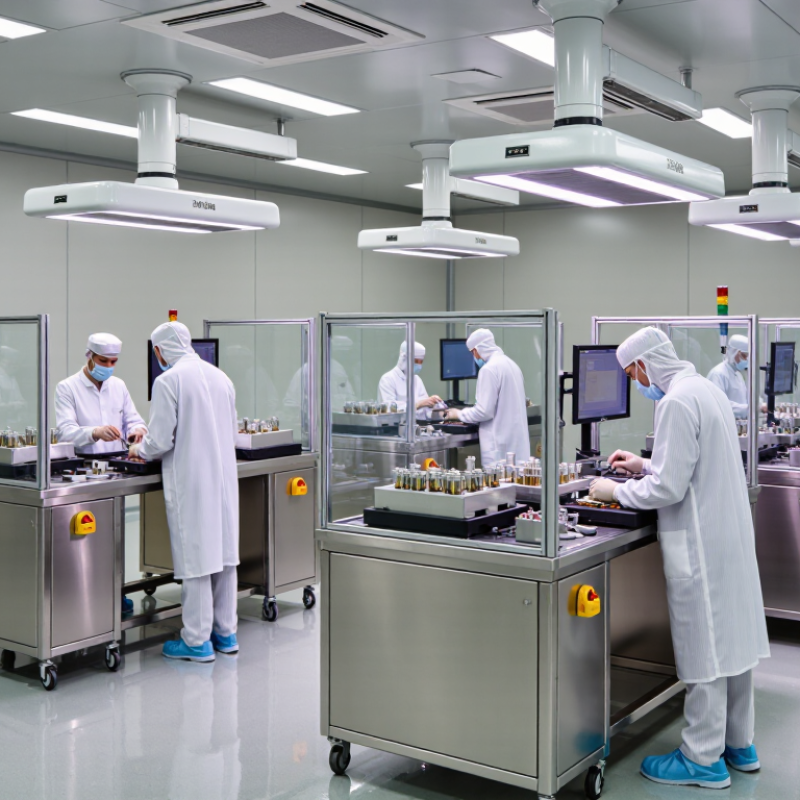
Global manufacturers depend on controlled environments to protect products from invisible threats. A single fiber, skin particle, or unstable air current can damage a sensor, contaminate medicine, or weaken a precision component. This is why a Clean Room matters beyond the factory floor. It protects quality at the moment products are assembled, tested, and packaged.
William Whyte, a widely cited cleanroom specialist, wrote, “Cleanroom technology is not a science, it is a way of life.” His words remain practical. A reliable Clean Room requires filtered air, monitored pressure, disciplined gowning, and regular cleaning. It also requires trained people who understand why each movement matters. An operator reaching across an open tray may create more risk than an imperfect cleaning schedule. Small actions leave evidence.
The benefits extend across international production networks. Consistent particle control helps manufacturers reduce defects, compare output between facilities, and meet demanding customer expectations. Environmental monitoring records can also support credible audits and process improvements. Still, a certified room is not automatically a perfect room. Equipment can drift. Procedures can become routine and careless. Even experienced teams make mistakes. That uncomfortable fact deserves attention.
Effective manufacturers review particle counts, temperature, humidity, pressure differences, and personnel behavior together. They investigate unusual readings instead of hiding them. The strongest Clean Room programs combine engineering controls with honest learning. This approach supports safer products, more stable production, and trust across borders. Cleanliness is not merely a facility feature. It is a daily manufacturing responsibility.
Define Cleanrooms: ISO 14644-1 Limits for 0.1–5 μm Particles
Why Is a Clean Room Important for Global Manufacturers?
A cleanroom is a controlled environment that limits airborne particles, temperature, humidity, and pressure. Particle control protects sensitive products from contamination and reduces manufacturing variation. Clean does not mean particle-free. It means measured and controlled.
ISO 14644-1 classifies air cleanliness by particle concentration. The standard covers particles from 0.1 to 5 micrometers. A micrometer is one millionth of a meter.
ISO Class 5 allows up to 100,000 particles at 0.1 μm per cubic meter. At 0.5 μm, the limit drops to 3,520 particles.
For ISO Class 7, the limits are 10,000,000 particles at 0.1 μm and 352,000 at 0.5 μm.
ISO Class 8 permits 100,000,000 particles at 0.1 μm and 3,520,000 at 0.5 μm.
These figures apply to defined sampling conditions, not casual visual checks.
Measurements require calibrated particle counters, suitable sampling locations, and documented occupancy states. Particles matter. Operators, clothing, packaging, and door movement can quickly change results.
A room may pass one test and fail during active production. That difference deserves attention.
Some smaller ISO classes also treat 5 μm limits as not applicable because reliable counting becomes difficult. Manufacturers should therefore review the standard, risk assessment, airflow design, and monitoring data together.
A lower class number sounds safer, but it may not address every product risk. That is where practical judgment remains necessary.
Identify Contamination Risks in Pharma, Semiconductor, and Aerospace Production
Why Is a Clean Room Important for Global Manufacturers?
Contamination risks differ across pharma, semiconductor, and aerospace production. In pharmaceutical facilities, a single fiber, skin flake, or airborne microorganism can compromise sterile products. The FDA’s Drug Shortages Task Force report found that 62% of shortages involved manufacturing or product-quality problems. Cleanroom discipline therefore protects both patients and supply continuity.
ISO 14644-1 sets measurable particle limits. An ISO Class 5 room permits up to 3,520 particles per cubic meter at 0.5 micrometers. An ISO Class 7 room permits 352,000. That gap is substantial. In semiconductor plants, smaller particles can damage wafers, distort patterns, and reduce yield. The IRDS 2023 roadmap also highlights increasingly narrow process windows and nanoscale defect-control challenges. Tiny particles matter.
Aerospace teams face different consequences. Dust, fibers, and molecular films can affect optical sensors, thermal surfaces, seals, and propulsion components. NASA contamination-control standards emphasize controlled handling, material selection, cleaning, and verification. A clean floor proves little. Technicians must inspect garments, airflow, tools, packaging, and transfer points. The uncomfortable part is simple: monitoring is not the same as control. Even well-designed rooms fail when operators rush gowning or leave doors open. Our assumptions deserve regular testing.
Match Manufacturing Zones to ISO Classes 5–8 and Particle Limits
Why Is a Clean Room Important for Global Manufacturers?
Match Manufacturing Zones to ISO Classes 5–8 and Particle Limits
A clean room turns invisible contamination into measurable risk. ISO 14644-1 provides a shared language for manufacturers operating across countries. It classifies air by particle concentration, not by appearance. An ISO Class 5 zone permits up to 3,520 particles measuring 0.5 micrometres or larger per cubic metre. The limit rises to 35,200 for ISO 6, 352,000 for ISO 7, and 3,520,000 for ISO 8. At five micrometres, the limits are 29, 293, 2,930, and 29,300 particles respectively.
The zone should match the product’s exposure and sensitivity. ISO 8 often supports material preparation and controlled storage. ISO 7 can protect assembly or filling areas with moderate risk. ISO 5 suits critical operations where exposed surfaces must remain highly protected. ISO 6 may serve as a transition zone around stricter areas. Air pressure, filtration, gowning, cleaning, and personnel movement must support the selected class.
A cleanroom is not clean by appearance.
In practical qualification work, particle counts sometimes pass while operator traffic remains excessive. That weakness deserves attention. Monitoring should reflect real production, including equipment operation and routine interventions. Sampling plans need suitable locations, calibrated instruments, and documented responses to failures. A low reading during an empty-room test proves little. Reliable control comes from repeated evidence during actual use, careful training, and honest review of recurring deviations.
| Manufacturing Zone | Typical Manufacturing Use | Recommended ISO Class | Maximum Airborne Particle Concentration Limits per m³ | Control Priority | |||||
|---|---|---|---|---|---|---|---|---|---|
| ≥0.1 μm | ≥0.2 μm | ≥0.3 μm | ≥0.5 μm | ≥1.0 μm | ≥5.0 μm | ||||
| Critical Processing and Final Assembly | High-risk open processing, precision optical assembly, advanced electronics, and other operations highly sensitive to particulate contamination. | ISO Class 5 | 100,000 | 23,700 | 10,200 | 3,520 | 832 | 29 | HEPA-filtered airflow, strict gowning, controlled personnel movement, and continuous particle monitoring. |
| Controlled Precision Production | Precision component fabrication, sensitive coating, micro-assembly, and production steps requiring strong particulate control but less stringent than critical zones. | ISO Class 6 | 1,000,000 | 237,000 | 102,000 | 35,200 | 8,320 | 293 | Stable filtration, pressure differentials, controlled access, and routine environmental verification. |
| General Clean Manufacturing | Enclosed product assembly, process staging, inspection, packaging preparation, and manufacturing where particulate exposure can affect yield or reliability. | ISO Class 7 | 10,000,000 | 2,370,000 | 1,020,000 | 352,000 | 83,200 | 2,930 | Zoning, air-change control, material segregation, cleaning schedules, and personnel discipline. |
| Controlled Support and Preparation Areas | Material preparation, component cleaning, secondary packaging, equipment support, and transition areas surrounding cleaner production zones. | ISO Class 8 | 100,000,000 | 23,700,000 | 10,200,000 | 3,520,000 | 832,000 | 29,300 | Basic cleanroom discipline, controlled materials flow, regular cleaning, and pressure protection for adjacent zones. |
Control Air Quality with HEPA Filters Rated 99.97% at 0.3 μm
For global manufacturers, air quality is a production variable, not background maintenance. A single fiber, dust fragment, or microbial carrier can damage sensitive surfaces and trigger costly rework. HEPA filtration provides a measurable control point. U.S. Department of Energy guidance defines HEPA performance as at least 99.97% removal of 0.3 μm particles under test conditions. That diameter is widely used as the most penetrating particle size, not a promise to catch every particle equally.
In a clean room, filters work with pressure cascades, sealed panels, controlled airflow, and disciplined gowning. ISO 14644-1 classifies rooms by airborne particle concentration, so operators should verify room data rather than rely on filter labels. Differential-pressure gauges should be logged. Particle counts should be trended after maintenance and process changes. Small leaks matter. A damaged gasket can bypass excellent filter media. CDC guidance also identifies HEPA filtration as capable of removing at least 99.97% of particles at 0.3 μm.
For multinational sites, the practical question is consistency. Are replacement filters tested? Is airflow balanced? Are alarms understood across shifts? These checks connect engineering performance with audit-ready evidence. The honest limitation is easy to miss: 99.97% is a test rating, not a guarantee of zero contamination. Filters load over time, and rushed installation can weaken the specification. Manufacturers should combine certified HEPA units with commissioning, leak testing, calibrated instruments, and documented training. A clean room can look perfect while hiding a small bypass path.
Validate and Monitor Facilities Under ISO 14644-2 and EU GMP Grade A
Why Is a Clean Room Important for Global Manufacturers?
A clean room protects sensitive products from airborne particles, microbes, and process-related contamination. For global manufacturers, consistent control matters across sites, shifts, and production volumes. ISO 14644-2 provides a framework for creating a cleanroom monitoring plan. The plan should define sampling locations, frequencies, alert limits, and action limits. It should also explain who reviews trends and how deviations are investigated.
Under EU GMP Grade A expectations, critical operations require exceptionally controlled conditions. Particle monitoring should cover both non-viable and viable contamination risks. Airflow visualization can reveal turbulence near filling points, open containers, or operator movements. A single reading may look acceptable, yet repeated results can expose gradual deterioration. Small changes matter.
Experienced teams combine routine measurements with qualification data, maintenance records, and operator observations. They check sensors, document interventions, and confirm that alarms receive timely responses. ISO 14644-2 supports ongoing evidence, not occasional reassurance. Grade A monitoring also demands practical judgment during real operations. A quiet room can still hide risk. Over-monitoring may create noise, while under-monitoring may miss change. That balance deserves regular review. Even well-designed programs can fail when sampling points no longer reflect current equipment or workflows. Reassessment should follow layout changes, process changes, and unusual environmental trends.
Why Is a Clean Room Important for Global Manufacturers?
Validating and continuously monitoring controlled environments helps manufacturers protect product quality, reduce contamination risk, and demonstrate compliance with ISO 14644-2 and EU GMP requirements.
The chart compares maximum airborne particle concentrations per cubic metre at particle sizes of ≥0.5 µm and ≥5.0 µm. ISO Class 5 limits are based on ISO 14644-1, while EU GMP Grade A limits are based on EU GMP Annex 1. ISO 14644-2 provides the framework for developing a monitoring plan, including measurement methods, locations, frequency, and ongoing review.
