• Shopping Cart Shopping Cart
    0Shopping Cart
Medical Supply Solutions
  • SERVICES
  • PRODUCTS
    • Durable Medical Equipment
    • General Medical Supplies
    • Incontinence Supplies
  • ABOUT US
  • SALES REPS
  • CONTACT US
  • BLOG
  • Menu Menu
10 Tips for Buying Medical Office Equipment Worldwide

10 Tips for Buying Medical Office Equipment Worldwide

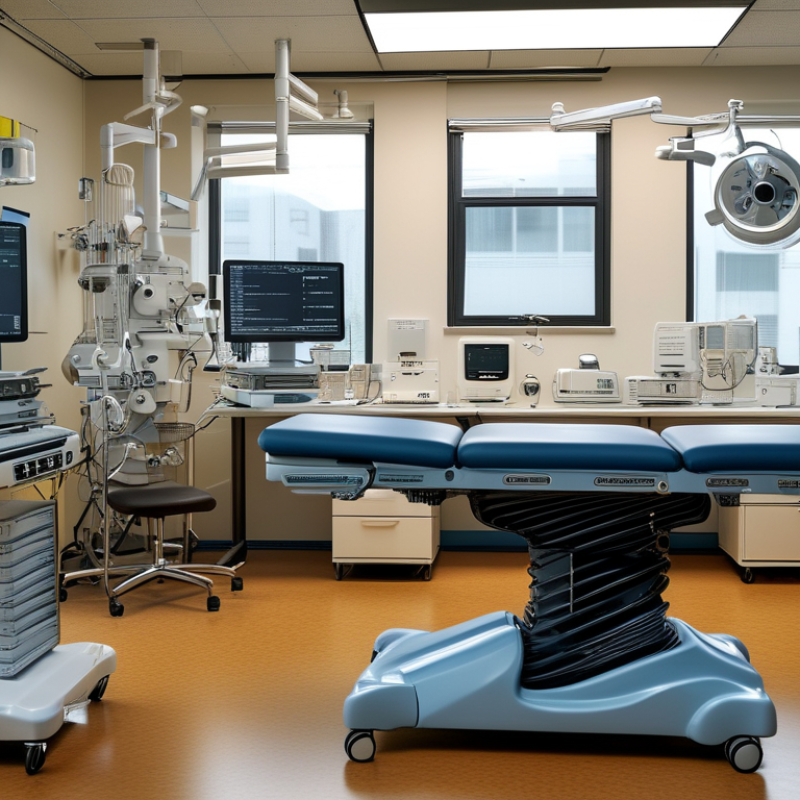
Buying medical office equipment across borders is not simply a price comparison exercise. It is a careful review of safety, performance, service, and long-term value. A diagnostic monitor may look affordable online, yet shipping, installation, training, replacement parts, and local compliance can change its real cost.

Small details matter. Check the manufacturer’s identity, warranty terms, product certifications, electrical specifications, and maintenance requirements. Ask who will repair the device when the screen fails or calibration drifts. A supplier should provide clear documentation, traceable product information, and responsive technical support. Vague answers are warning signs.

Don Berwick, a respected healthcare quality leader, said, “Every system is perfectly designed to get the results it gets.” His observation applies directly to medical office equipment purchasing. A poorly chosen chair, sterilizer, examination light, or patient monitor can slow staff, frustrate patients, and create avoidable risks. The right equipment supports a smoother clinical workflow.

However, no buying guide can predict every local challenge. Import procedures, voltage standards, language barriers, and service availability differ between countries. Even experienced buyers can overlook one of them. That is why a written checklist, supplier verification, and independent professional advice are valuable before payment.

This guide, “10 Tips for Buying Medical Office Equipment Worldwide,” focuses on practical decisions. It explains how to compare suppliers, estimate total ownership costs, confirm usability, and protect your clinic from unpleasant surprises. The goal is not to choose the cheapest product. It is to choose reliable equipment that remains useful after delivery.
10 Tips for Buying Medical Office Equipment Worldwide
Table of Contents [Hide]
1 Define Clinical Needs and Equipment Specifications
2 Verify Global Standards, Certifications, and Product Safety
3 Evaluate Suppliers, Prices, Warranties, and Total Ownership Costs
4 Plan International Shipping, Customs, Installation, and Staff Training
5 Inspect Delivered Equipment and Establish Ongoing Maintenance Procedures

Define Clinical Needs and Equipment Specifications

Buying medical office equipment worldwide should begin with the clinical problem, not a product catalogue. Define which examinations, treatments, and patient groups the equipment must support. A general practice may need an examination table, diagnostic light, and vital-sign monitor. A dermatology room needs different imaging, lighting, and surface requirements. Ask clinicians to describe one typical appointment, step by step. Watch where delays occur. That detail often matters more than a longer feature list.

Translate those observations into measurable specifications. Record dimensions, weight limits, accuracy ranges, operating temperature, noise level, and cleaning methods. Include patient positioning, accessibility, and staff reach. Check electrical frequency, plug configuration, and backup power needs for the destination facility. A device can perform well in a showroom yet fail in a crowded room. Measure doorways and lifts before ordering. It sounds obvious. People still miss it.

Request manuals, calibration information, maintenance intervals, training requirements, and evidence of quality testing. Ask whether qualified local technicians can provide safe service and whether replacement parts are realistically available. Confirm that documentation matches the equipment’s exact model and configuration. I have learned that vague specifications create expensive arguments later. My own checklist once omitted storage humidity, and that mistake delayed installation. Revisit assumptions with nurses, clinicians, and facility staff before approval. Their practical objections may expose a specification that looked sensible on paper.

Verify Global Standards, Certifications, and Product Safety

10 Tips for Buying Medical Office Equipment Worldwide

Global purchasing begins with verification, not price comparison. The WHO Global Patient Safety Action Plan 2021–2030 estimates that one in ten patients experiences harm during healthcare. That figure makes documentation a practical safety tool. Request the exact model, intended use, risk class, and manufacturing site. Check whether the certificate covers that model, not merely the product family. Confirm the issuing body, certificate number, validity period, and applicable market.

Look for ISO 13485 quality-system evidence and ISO 14971 risk-management records. Electrical equipment should match relevant IEC 60601-1 requirements, including leakage-current and alarm testing. Software-controlled devices also need documented cybersecurity and usability controls. Ask for calibration intervals, maintenance instructions, spare-part availability, and local technical support. A certificate without a clear scope is weak evidence. I have seen procurement files that looked complete but lacked the final conformity declaration.

Cleaning compatibility deserves equal attention. The WHO Global Report on Infection Prevention and Control (2022) reports healthcare-associated infections affecting about 7% of patients in high-income countries and 15% in low- and middle-income countries at any time. Verify that surfaces tolerate the disinfectants used in your clinic. Check plug type, voltage, language requirements, training materials, and delivery conditions. Do not assume international approval means local suitability. It may not. Keep photographs, serial numbers, inspection results, and supplier responses in one traceable record before placing the order.

10 Tips for Buying Medical Office Equipment Worldwide - Verify Global Standards, Certifications, and Product Safety
Tip Decision Dimension What to Verify Relevant Global Standard, Regulation, or Record Practical Evidence to Request Common Warning Sign
1 Define the intended use and risk level Confirm the device’s intended purpose, user group, operating environment, patient contact, and whether it is active, measuring, diagnostic, or therapeutic equipment. Device classification rules under the destination market’s medical-device framework; risk-based classification is used in major regulatory systems. Intended-use statement, product specification sheet, risk classification rationale, and user manual. The seller cannot clearly explain what the device is designed to do or which users may operate it.
2 Check the quality-management system Determine whether the manufacturer maintains a controlled quality system covering design, production, corrective actions, complaints, and document control. ISO 13485:2016 is the internationally recognized quality-management standard for medical devices. Current ISO 13485 certificate, certification scope, issuing certification body, certificate number, and validity dates. A certificate is provided without a defined scope, expiration date, or independent certification-body details.
3 Validate electrical and mechanical safety For mains-powered or patient-connected equipment, verify protection against electric shock, excessive temperature, mechanical hazards, and single-fault conditions. IEC 60601-1 is the core general safety and essential-performance standard for medical electrical equipment. IEC 61010-1 may apply to certain laboratory or measurement equipment. Applicable test report, safety evaluation, rated voltage and frequency, leakage-current results, and product model identification. The test report covers a different model, outdated hardware, or a non-medical product category.
4 Assess electromagnetic compatibility Confirm that the equipment can operate correctly near other electronic devices and will not create unacceptable electromagnetic interference. IEC 60601-1-2 specifies electromagnetic compatibility requirements for applicable medical electrical equipment. EMC test report, immunity and emissions results, operating restrictions, and required separation distances. No information is supplied about interference risks, wireless functions, or use near life-supporting equipment.
5 Confirm market authorization before import Identify the legal route for placing the exact model on the market in the destination country or region. Examples include Regulation (EU) 2017/745 for the European Union, applicable national medical-device rules, and country-specific authorization pathways. Declaration of conformity, device registration or authorization record where required, conformity-assessment documents, and authorized representative details when applicable. A generic “international approval” claim is used instead of authorization for the destination market and exact model.
6 Distinguish conformity marks from certificates Check whether a marking is legally applicable to the product, whether the conformity route was completed, and whether the supporting documents match the model. CE marking may apply under relevant European legislation; it is a manufacturer’s conformity marking, not a universal safety certificate. Other markets may require different marks or registrations. Signed declaration of conformity, applicable legislation, conformity-assessment route, notified-body information when required, and product-label photographs. A logo is displayed without a declaration of conformity or without identifying the applicable legislation.
7 Review risk management and usability Verify that foreseeable hazards, misuse, alarms, maintenance activities, and user-interface risks were evaluated and controlled. ISO 14971 covers medical-device risk management. IEC 62366-1 addresses usability engineering for medical devices. Risk-management summary, hazard controls, alarm specifications, usability validation summary, and residual-risk information in the instructions. The manual lists warnings but provides no clear operating limits, alarm behavior, or maintenance instructions.
8 Check software and cybersecurity controls For connected or software-controlled equipment, evaluate update procedures, access control, data protection, vulnerability handling, and network dependencies. IEC 62304 addresses medical-device software life-cycle processes. Cybersecurity expectations may also be set by the destination regulator and applicable national guidance. Software version, cybersecurity documentation, update policy, supported operating systems, vulnerability-reporting process, and backup requirements. The device requires unsupported software, uses default passwords, or has no documented security-update process.
9 Verify materials, sterilization, and patient contact safety Determine whether components contact skin, mucosa, tissue, blood, or medication, and verify the required cleaning, disinfection, or sterilization method. ISO 10993 series may apply to biological evaluation of patient-contacting materials. Sterilization requirements depend on the device and validated process. Material declarations, biocompatibility evaluation, sterilization validation where applicable, reprocessing instructions, and maximum reuse cycles. The product is described as “non-toxic” without material details, contact duration, or validated reprocessing instructions.
10 Plan lifecycle support and traceability Assess calibration, preventive maintenance, spare parts, training, warranty, complaint handling, recall communication, and end-of-life support. ISO 13485 includes controls related to production, servicing, complaints, and corrective actions. Calibration should be traceable to recognized measurement standards where applicable. Service schedule, calibration certificate, serial-number records, warranty terms, spare-parts commitment, training plan, and post-market contact procedure. The purchase price is clear, but service intervals, calibration responsibility, replacement parts, and support duration are undefined.

Evaluate Suppliers, Prices, Warranties, and Total Ownership Costs

Buying medical office equipment worldwide requires more than comparing catalog prices. Evaluate suppliers through verifiable certifications, service history, customer references, and clear technical documentation. Ask whether technicians can install, calibrate, and repair the equipment in your region. A polished website proves little. Request written answers.

Compare identical specifications, not just product names. Check imaging quality, operating capacity, energy use, delivery charges, installation fees, training, and required accessories. A low quote can still look attractive. Then consumables arrive. Calculate the total ownership cost over five years, including maintenance visits, replacement parts, software updates, storage, and possible downtime. A spreadsheet helps expose hidden differences.

Read the warranty line by line. Confirm its duration, covered components, labor terms, response time, shipping responsibility, and exclusions. Ask what happens if a fault appears after installation but before regular use. Suppliers should provide realistic timelines, not vague promises. Keep invoices, serial numbers, inspection reports, and service records in one secure file. This supports accountability and future resale decisions. Experienced buyers also request a trial, demonstration, or independent inspection when practical. It may delay the purchase. That delay can prevent an expensive mistake. Even careful evaluations have weak points, especially when currency changes, local infrastructure, or staff turnover disrupts original cost estimates. Recheck those assumptions before signing.

Plan International Shipping, Customs, Installation, and Staff Training

Buying medical office equipment internationally is a logistics project, not a simple purchase. I begin with the clinic’s electrical standards, room dimensions, humidity, and service access. UNCTAD’s Review of Maritime Transport 2023 reports that over 80% of global merchandise trade by volume moves by sea. Sea freight lowers cost, but it adds port handling and schedule risk. For urgent or temperature-sensitive items, compare validated air options before booking. Build a landed-cost sheet covering freight, insurance, duties, storage, broker fees, and inland delivery. Leave contingency money. Estimates are often optimistic.

Customs preparation should start before the purchase order. Confirm the correct HS classification, origin documents, commercial invoice, packing list, serial numbers, and import permits. Requirements vary by device risk and destination. The World Bank’s Logistics Performance Index 2023 evaluates customs, infrastructure, tracking, and delivery reliability. Border performance affects the whole journey. Ask a licensed local customs professional to review the file. Do not rely on a supplier’s generic template. One missing field can hold a crate for days.

Installation needs a named owner and a written site checklist. Verify voltage, grounding, ventilation, network access, lifting routes, and infection-control procedures. Schedule commissioning after the equipment reaches room temperature. Keep calibration records and acceptance-test results. WHO’s Global Model Regulatory Framework for Medical Devices emphasizes post-market surveillance and safe device use. Training should include operators, cleaners, and maintenance staff, with translated guides and hands-on practice. Repeat competency checks after thirty days. People forget. My first plan underestimated downtime, so I now protect clinical schedules with a backup workflow.

Inspect Delivered Equipment and Establish Ongoing Maintenance Procedures

Buying medical office equipment worldwide does not end when the shipment arrives. Inspection at delivery protects patients, staff, budgets, and future service decisions. Before opening the crate, photograph its seals, labels, packaging, and visible damage. Record the delivery date, serial details, accessories, and temperature indicators when provided. Use the supplier’s specifications and a qualified technician’s checklist during inspection. Check power requirements, moving parts, displays, alarms, controls, and included documentation. Do not place equipment into clinical use after a rushed visual check. Test it in a controlled area. Compare measured performance with the acceptance criteria agreed before purchase. Any mismatch deserves a written report, not a quiet adjustment. In my experience, small packaging dents can hide alignment or calibration problems. That lesson is easy to overlook.

Create a maintenance file for every device. Include installation records, operating instructions, inspection results, repairs, and staff training. Set schedules based on risk, professional guidance, usage, and applicable local requirements. High-use devices may need more frequent checks than identical equipment in a quiet office. Assign one accountable person, even when outside technicians perform the work. Track cleaning, calibration, electrical safety, software updates, and replacement parts. Keep spare components approved for the specific model. Train users to report unusual noise, heat, error messages, or inconsistent readings. Do not normalize repeated faults. Review maintenance records monthly, but allow the procedure to evolve. I once treated a checklist as complete because every box was marked. The fault appeared later because no one questioned an unusual reading. That mistake changed our process: signatures now include measurements and comments.

10 Tips for Buying Medical Office Equipment Worldwide

Inspect Delivered Equipment and Establish Ongoing Maintenance Procedures

Temperature monitoring is an essential part of receiving and maintaining medical office equipment. Verify that temperature-controlled units arrive undamaged, reach the required operating range, and have functioning alarms and monitoring devices. The temperature bands below reflect CDC guidance for common vaccine storage categories. Always confirm product labeling and applicable local regulations.

Related Posts

  • 10 Tips for Buying Medical Office Equipment?

    10 Tips for Buying Medical Office Equipment?

  • How to Source Medical Equipment and Supplies Globally?

    How to Source Medical Equipment and Supplies Globally?

  • 2026 Best Medical DME Supplies for Global Buyers?

    2026 Best Medical DME Supplies for Global Buyers?

  • Essential Paramedic Supplies You Need for Effective Care?

    Essential Paramedic Supplies You Need for Effective Care?

  • Discover the Best Medical Equipment Websites in China Today?

    Discover the Best Medical Equipment Websites in China Today?

  • Top 10 Medical Supply Places in China for Global Buyers?

    Top 10 Medical Supply Places in China for Global Buyers?

Blog Tags:

  • medical equipment supplier
  • medical equipment wholesale
  • medical equipment manufacturers
  • medical supplies wholesale
  • clinic equipment
  • hospital equipment suppliers
© 2026 Medical Supply Solutions :: Website by Integritive Web Design :: Asheville, NC
Scroll to top Scroll to top Scroll to top