• Shopping Cart Shopping Cart
    0Shopping Cart
Medical Supply Solutions
  • SERVICES
  • PRODUCTS
    • Durable Medical Equipment
    • General Medical Supplies
    • Incontinence Supplies
  • ABOUT US
  • SALES REPS
  • CONTACT US
  • BLOG
  • Menu Menu
2026 Best Medical Supply Equipment for Global Buyers

2026 Best Medical Supply Equipment for Global Buyers

Global healthcare buyers are entering 2026 with more complex procurement needs. Medical supply equipment must support safety, continuity, and measurable clinical value. The World Health Organization reports more than two million medical device types worldwide, grouped into over 7,000 categories. That scale makes product comparison difficult.

Demand is also becoming more unequal. WHO and UNICEF reports continue to show major gaps in essential health services, especially across low-resource settings. Equipment must therefore match local infrastructure, staff training, maintenance capacity, and power reliability. A ventilator is not truly useful when replacement parts cannot arrive. A diagnostic device may fail when calibration support is unavailable.

This guide examines 2026 medical supply equipment for global buyers through practical and evidence-based criteria. It considers intended use, usability, total ownership cost, infection-control requirements, documentation, warranty terms, and supplier responsiveness. WHO guidance on medical devices emphasizes lifecycle management, including selection, installation, training, maintenance, and disposal. Those details matter more than attractive product photographs.

Price alone misleads. It often hides service costs.

Recent healthcare technology outlooks from MedTech Europe, OECD health data, and leading market research firms indicate continued investment in diagnostics, monitoring, digital workflows, and home-based care. Yet market forecasts are not guarantees. Regional reimbursement systems, import procedures, and hospital readiness can change outcomes quickly. Buyers should verify certifications, performance claims, clinical evidence, and after-sales support before ordering. No ranking is perfect. Real-world feedback from nurses, biomedical engineers, and procurement teams should challenge every shortlist.

2026 Best Medical Supply Equipment for Global Buyers
Table of Contents [Hide]
1 Medical Supply Equipment: Definition, Scope, and Key Uses
2 Major Equipment Categories for Hospitals and Healthcare Providers
3 How to Evaluate Quality, Safety, and Clinical Performance
4 Global Standards, Certifications, and Import Requirements
5 Procurement, Supplier Comparison, and Total Cost Planning

Medical Supply Equipment: Definition, Scope, and Key Uses

Medical supply equipment refers to tools, devices, and systems used to support patient care. Its scope covers examination, diagnosis, treatment, monitoring, rehabilitation, and infection control. Basic items include examination tables, wheelchairs, thermometers, and blood pressure monitors. More advanced equipment may require trained operators, regular calibration, and controlled installation.

Hospitals use this equipment in emergency rooms, wards, operating areas, and laboratories. Clinics often need compact devices that withstand frequent cleaning and daily handling. Home-care providers may prioritize simple controls, readable displays, and safe storage. A global buyer should examine intended use, user training, maintenance access, and replacement parts before ordering. Product documents should clearly state operating limits, materials, cleaning methods, and relevant local regulatory requirements.

Small details matter. A pulse oximeter used in a busy clinic needs a durable sensor cable and a visible display. A cold-storage unit needs stable temperature records, not merely a low advertised temperature. Packaging also deserves inspection. Weak internal protection can damage equipment during long-distance transport. Specifications help, but they are not the whole decision. Real working conditions may expose problems that brochures overlook. I would also question overly perfect performance claims. Even careful evaluations can miss noise, awkward controls, or delayed technical support. Buyers should record these observations during testing and compare them with the needs of actual medical staff.

Major Equipment Categories for Hospitals and Healthcare Providers

2026 Best Medical Supply Equipment for Global Buyers

Hospitals need equipment that supports diagnosis, treatment, recovery, and daily patient care. Major categories include diagnostic systems, patient monitoring devices, surgical equipment, sterilization units, mobility aids, and emergency response tools. Each category serves a different clinical pressure.

Diagnostic equipment may include imaging systems, laboratory analyzers, and point-of-care testing devices. Monitoring equipment tracks oxygen levels, blood pressure, temperature, and heart activity.

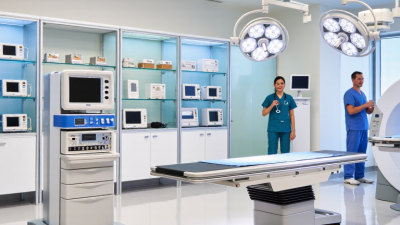
Surgical departments require operating tables, lighting, anesthesia support, and reliable instrument processing.

Sterilization equipment deserves special attention. A delayed cycle can disrupt an entire procedure schedule. Patient beds, wheelchairs, infusion systems, and emergency carts also affect workflow more than buyers sometimes expect.

Tips: Match equipment with staff training, power standards, service access, and available space.

Check documentation, calibration procedures, cleaning requirements, and spare-part availability before ordering. Ask for performance records, warranty terms, and safety certifications accepted in the destination market.

Do not judge quality by price alone. A cheaper monitor may create higher costs through downtime and replacement parts. However, premium equipment is not automatically better; some facilities overbuy features they rarely use. That is a common procurement mistake.

Review clinical needs with nurses, technicians, and biomedical engineers. Their practical feedback may reveal problems that a sales specification misses.

Test usability where possible. Small details matter, such as readable screens, quiet alarms, smooth wheels, and simple maintenance access.

How to Evaluate Quality, Safety, and Clinical Performance

When buying medical equipment in 2026, evaluate evidence before price. The WHO Global Atlas of Medical Devices reports more than two million device types worldwide. That scale makes a simple compliance certificate insufficient. Request the intended-use statement, risk-management file, sterilization method, calibration records, and service history. Check whether testing matches the actual clinical setting, including humidity, voltage instability, cleaning routines, and user training. A device may perform well in a laboratory yet fail beside a crowded emergency bed.

Clinical performance needs measurable proof. Review sensitivity, specificity, accuracy, alarm limits, battery endurance, and failure rates. Compare results with independent studies, not only supplier brochures.

The FDA’s 2023 device-reporting data included over two million medical-device reports, although reports can contain duplicates and do not prove causation. That limitation matters.

Ask how adverse events were investigated, corrected, and documented. Also verify software update control and cybersecurity procedures. Small gaps become expensive.

Tips: Build a scoring sheet with quality, safety, usability, maintenance, and clinical evidence. Ask for three years of post-market data when available. Test samples with local clinicians. Watch the cleaning process. If operators need lengthy explanations, the design may be wrong for your facility. I would also challenge my own preference for newer equipment; “advanced” does not always mean safer. Procurement teams should record unanswered questions, because uncertainty is itself a purchasing risk.

Global Standards, Certifications, and Import Requirements

For global buyers, compliance begins before a purchase order. The WHO reports more than 2 million medical device types across approximately 7,000 generic groups. This scale makes product classification critical. A wound dressing, infusion pump, and diagnostic analyzer may follow different approval routes. Buyers should request ISO 13485 evidence, a risk-management file aligned with ISO 14971, and test reports for relevant IEC standards. Electrical devices often require IEC 60601-1 testing, while patient-contact materials may need ISO 10993 biological evaluation.

Documentation must match the destination market. Depending on jurisdiction, importers may need registration, conformity assessment, authorized representation, labeling in the local language, and a unique device identifier. Customs files should clearly show the HS code, manufacturer details, lot number, expiry date, country of origin, and transport conditions. The WHO Global Model Regulatory Framework stresses lifecycle oversight, not only pre-market approval. That matters for recalls and post-market complaints.

A certificate is not proof of every claim. Check its scope, validity, issuing body, and covered product sites. The ISO Survey 2023 shows that management-system certification is widely used across international supply chains, but certification quality still depends on audit depth. In practice, one missing translation or temperature record can delay clearance. Cold-chain equipment may require calibrated data loggers; paper records are easy to lose. Buyers should also compare the declared shelf life with real delivery time. This step is often underestimated. Mistakes remain possible, especially when requirements change faster than internal procurement procedures.

2026 Best Medical Supply Equipment for Global Buyers - Global Standards, Certifications, and Import Requirements

Requirements are typical 2026 market-entry checkpoints. Final obligations depend on product classification, intended use, technical specifications, and the destination country's current regulations.
Equipment Category Typical Risk Profile Key International Standards Common Certification or Regulatory Pathway Typical Import Requirements Documents Buyers Should Request
Medical Examination Gloves
Nitrile, latex, or vinyl disposable gloves
Generally non-invasive, low to moderate risk depending on sterility and intended use ISO 11193-1; EN 455 series; ASTM D6319 for nitrile examination gloves; ISO 10993-5 and ISO 10993-10 where biological evaluation is required Market-specific medical-device conformity assessment; quality management controls commonly aligned with ISO 13485 Product registration or listing where required; labeling in the destination language; packaging, shelf-life, and lot traceability information; proof of conformity for the intended medical use Declaration of conformity, test reports, material composition, biocompatibility evidence, batch certificate, sterilization certificate if sterile, labeling artwork, and certificate of analysis
Surgical Masks and Respiratory Protection
Procedure masks and filtering facepieces
Usually low risk for procedure masks; occupational respiratory protection may follow a separate product regime EN 14683 for medical face masks; ASTM F2100 for medical face masks; ISO 22609 for resistance to penetration by synthetic blood; EN 149 for certain filtering half masks Medical-device conformity pathway for surgical masks; separate personal-protective-equipment approval may apply to respirators Performance classification, authorized labeling, importer details, product registration where applicable, and evidence that medical and occupational claims are not being mixed Bacterial filtration efficiency report, differential-pressure report, splash-resistance report, flammability test, fit or filtration test where applicable, declaration of conformity, and packaging specifications
Infusion Pumps
Volumetric and syringe pumps
Moderate to high risk because inaccurate delivery may directly affect patient treatment IEC 60601-1; IEC 60601-2-24; ISO 14971; IEC 62304 for medical-device software; IEC 62366-1 for usability engineering Formal conformity assessment is commonly required; classification may require third-party review or premarket authorization depending on destination Electrical safety and electromagnetic compatibility evidence; device registration; authorized local representative or importer; calibration and maintenance arrangements Technical file, risk-management file, software documentation, electrical and EMC test reports, alarm verification, accuracy and occlusion testing, user manual, service manual, and post-market plan
Multiparameter Patient Monitors
ECG, oxygen saturation, temperature, and non-invasive blood pressure monitoring
Moderate risk; risk increases when used for continuous monitoring or critical-care decisions IEC 60601-1; IEC 60601-1-2; IEC 60601-2-27 for electrocardiographic monitoring; IEC 60601-2-49 for multifunction patient monitors; ISO 80601-2-61 for pulse oximeter equipment Medical-device registration or premarket clearance/approval according to intended use and claims; clinical or performance evidence may be required Registration, importer authorization, local-language labeling, cybersecurity controls for connected devices, and verification of probe and accessory compatibility Performance validation, alarm testing, EMC and electrical safety reports, software and cybersecurity documentation, calibration procedure, clinical evaluation, and accessories list
Medical Ventilators
Critical-care and transport ventilators
High risk and generally subject to stringent premarket controls ISO 80601-2-12 for critical-care ventilators; ISO 80601-2-84 for emergency and transport ventilators where applicable; IEC 60601-1; IEC 60601-1-2; ISO 14971 Premarket authorization or conformity assessment normally required; clinical, performance, and electrical safety evidence should match the intended patient population Device registration, authorized importer, local service capability, spare-parts plan, oxygen and gas compatibility checks, and local electrical requirements Ventilation performance tests, alarm validation, cybersecurity file, biocompatibility assessment for patient-contact parts, software documentation, maintenance schedule, and training materials
Ultrasound Diagnostic Systems
General imaging and diagnostic ultrasound equipment
Moderate risk; higher scrutiny may apply to specialized diagnostic or therapeutic functions IEC 60601-1; IEC 60601-1-2; IEC 60601-2-37; IEC 62304 for software; IEC 62366-1 for usability; IEC 60601-1-6 where applicable Conformity assessment or premarket authorization based on intended use, imaging claims, and software functions Registration, electrical compatibility, cybersecurity documentation for networked systems, installation qualification, and local technical support Acoustic output measurements, image-quality verification, EMC and safety reports, software validation, probe specifications, cleaning instructions, and installation requirements
Steam Sterilizers and Autoclaves
Small and large steam sterilization equipment
Equipment risk varies; sterilization-process failure can create significant patient safety risk ISO 17665; EN 13060 for small steam sterilizers; ISO 11140 for chemical indicators; ISO 17665 process validation principles; IEC 61010-2-040 where applicable Product conformity assessment plus documented installation, operational, and performance qualification; local pressure-vessel rules may also apply Electrical and pressure-system compliance, water-quality specifications, installation approval, validation records, and local occupational-safety requirements Cycle validation, temperature and pressure mapping, leak testing, drying-performance data, maintenance manual, calibration certificates, pressure-vessel documents, and spare-parts list
Patient Beds and Pressure-Relief Mattresses
Manual or electric hospital beds and support surfaces
Low to moderate risk; electric adjustment and fall-prevention features increase safety requirements IEC 60601-2-52 for medical beds; IEC 60601-1 for powered equipment; ISO 13485 quality controls commonly used for medical-device production Classification and conformity route depend on intended use, powered functions, and destination-market rules Load and stability evidence, electrical safety testing for powered models, local-language instructions, cleaning compatibility, and importer details Mechanical safety test report, electrical and EMC reports, maximum patient weight, mattress compatibility data, fire-performance evidence where required, and maintenance instructions
Wheelchairs and Mobility Equipment
Manual and powered wheelchairs
Generally low to moderate risk; powered systems require additional electrical and battery controls ISO 7176 series for wheelchairs, including static strength, fatigue, braking, stability, and powered-wheelchair testing; IEC 60601-1 may apply to certain powered medical electrical systems Medical-device or mobility-product conformity route depends on intended medical use and destination regulations Battery transport compliance, electrical safety, load-rating information, local labeling, spare-parts availability, and accessibility-related documentation ISO 7176 test reports, battery and charger specifications, electromagnetic compatibility evidence, user manual, maximum load, braking data, and packaging dimensions
Diagnostic In-Vitro Testing Equipment
Analyzers, reagents, and point-of-care systems
Risk varies from low to high according to the test result's impact on diagnosis or treatment ISO 13485; ISO 14971; ISO 15189 for medical laboratories; IEC 61010-1; IEC 61326-1; ISO 23640 for reagent stability where applicable In-vitro diagnostic classification, performance evaluation, registration, and conformity assessment according to the destination market Cold-chain documentation where required, shelf-life and stability evidence, reagent registration, calibration traceability, labeling, and authorized importer arrangements Analytical and clinical performance data, stability studies, calibration certificates, interference studies, safety data, instructions for use, and lot-release documentation

Destination-Market Import Checkpoints

Target Market Primary Regulatory Framework Common Buyer-Side Requirements Import and Customs Documents
European Union and EEA Medical Device Regulation (EU) 2017/745; In Vitro Diagnostic Regulation (EU) 2017/746 where applicable Risk classification, technical documentation, clinical evaluation or performance evaluation, EU declaration of conformity, CE marking where required, economic-operator details, post-market surveillance, and UDI obligations where applicable Commercial invoice, packing list, transport document, HS code, customs value, origin information, CE and conformity documents, importer details, and product registration evidence where required
United States Federal medical-device requirements administered by the national medical-device regulator, including establishment registration, device listing, premarket submission where applicable, quality-system requirements, labeling, and UDI rules Confirm product classification, determine whether 510(k), De Novo, premarket approval, or an exemption applies, identify the U.S. importer or agent where required, and verify complaint and adverse-event procedures Commercial invoice, packing list, airway bill or bill of lading, customs entry data, device listing or clearance evidence where applicable, manufacturer information, and country-of-origin documentation
United Kingdom UK medical-device regulations, market-registration requirements, and applicable UKCA or recognized CE transitional arrangements Check the current recognition period for CE-marked devices, appoint a responsible person when required, complete market registration, maintain English labeling, and verify conformity-assessment route Commercial invoice, packing list, customs declaration, product registration evidence, conformity documents, responsible-person details, and transport documentation
Canada Canadian medical-device regulations with device licensing and establishment licensing requirements that vary by device class and business activity Confirm device class, obtain the applicable device license or establishment license, provide bilingual labeling where required, and maintain complaint and recall procedures Commercial invoice, packing list, customs documents, device license or establishment-license information, bilingual labeling, and origin documentation
Australia Therapeutic-goods framework with inclusion in the Australian medical-device register generally required before supply, subject to exemptions Confirm classification, sponsor responsibilities, conformity evidence, Australian labeling, post-market reporting, and register inclusion before commercial distribution Commercial invoice, packing list, transport documents, register-inclusion evidence, sponsor details, conformity documents, and country-of-origin information
Gulf Cooperation Council Markets Country-specific medical-device registration and importer-licensing rules; national authority requirements may differ between markets Use an authorized local representative or importer where required, prepare legalized or authenticated documents when requested, provide Arabic labeling or instructions where applicable, and verify shelf-life rules Commercial invoice, packing list, certificate of origin, conformity documents, free-sale certificate where requested, legalized documents, import permit, and local registration evidence
Japan and South Korea National medical-device approval, certification, registration, and local marketing-authorization-holder requirements Confirm local classification, translation requirements, quality-system evidence, local representative or authorization-holder role, and product-specific approval pathway Commercial invoice, packing list, customs declaration, local approval or registration evidence, translated labeling, certificate of origin, and conformity documentation
Buyer verification note: ISO certification, a test report, or a CE mark does not automatically authorize importation in every country. Before shipment, verify the product classification, destination-market registration, importer or local-representative obligations, labeling language, customs tariff code, shelf-life requirements, electrical specifications, and any country-specific permits.

Procurement, Supplier Comparison, and Total Cost Planning

2026 Best Medical Supply Equipment for Global Buyers

Procurement should begin with clinical use, not catalog price. In field purchasing, a low quotation often hides expensive maintenance, consumables, or training. The WHO and UNICEF 2023 report found that one in twelve healthcare facilities lacked basic water services in 2022. This matters when comparing sterilizers, diagnostic systems, and surgical equipment. A supplier’s technical file should show cleaning requirements, calibration intervals, spare-part availability, and service response times. Ask for evidence, not promises. That step is easy to skip.

Supplier comparison needs a common scoring sheet. Weight clinical performance, regulatory documentation, delivery reliability, warranty coverage, and local support. The World Bank’s Logistics Performance Index 2023 shows major differences between countries in customs, infrastructure, and shipment tracking. Therefore, a factory price cannot predict the delivered cost. Compare freight, insurance, import duties, installation, validation, staff training, and currency risk. Keep assumptions visible.

Total cost planning should cover the equipment’s full working life. Include electricity, software updates, replacement sensors, preventive maintenance, calibration, and downtime. The WHO and UNICEF Global Report on Assistive Technology estimates that more than 2.5 billion people need assistive products, with demand projected to exceed 3.5 billion by 2050. Demand is growing, but budgets remain uneven. A five-year cost model is useful, yet it is not perfect. Local repair capacity may change. Consumable prices may rise. Recheck the model every six months.

Related Posts

  • Top Medical Equipment Suppliers Worldwide?

    Top Medical Equipment Suppliers Worldwide?

  • How to Choose a Reliable Medical Equipment Shop?

    How to Choose a Reliable Medical Equipment Shop?

  • How to Source Medical Equipment and Supplies Globally?

    How to Source Medical Equipment and Supplies Globally?

  • 10 Tips for Buying Medical Office Equipment Worldwide

    10 Tips for Buying Medical Office Equipment Worldwide

  • What Are the Top Medical Equipment Websites in China?

    What Are the Top Medical Equipment Websites in China?

  • How to Find a Reliable DME Medical Supply Supplier?

    How to Find a Reliable DME Medical Supply Supplier?

Blog Tags:

  • medical equipment supplier
  • medical equipment manufacturer
  • medical supplies wholesale
  • hospital medical equipment
  • medical equipment distributor
  • medical supplies supplier
© 2026 Medical Supply Solutions :: Website by Integritive Web Design :: Asheville, NC
Scroll to top Scroll to top Scroll to top