Top Medical Equipment Suppliers Worldwide?
Choosing the top medical equipment suppliers worldwide requires more than comparing product catalogs or annual sales. Hospitals depend on reliable devices when every minute matters. A ventilator must deliver consistent pressure. A surgical light must remain stable during long procedures. Diagnostic systems need accurate results, clear software, and dependable technical support. These practical details often reveal more than impressive marketing claims.
This guide examines leading suppliers through product quality, regulatory discipline, innovation, service coverage, and customer experience. It considers manufacturers serving hospitals, laboratories, clinics, and emergency departments across different regions. Evidence may include certifications, published performance data, installation records, warranty terms, and feedback from healthcare professionals. Experience matters here. A supplier with advanced imaging equipment may still disappoint if replacement parts arrive slowly or training is incomplete.
No ranking is flawless. Market conditions change, and regional performance can differ. Some companies excel in critical care but offer limited support for smaller clinics. Others provide affordable solutions but lack strong international service networks. That difference deserves attention. Reliable medical equipment should be safe, maintainable, and suitable for its intended clinical environment. This introduction sets a practical framework for evaluating global suppliers without treating reputation as proof. Readers should verify current certifications, local availability, and independent clinical evidence before making purchasing decisions. A trusted supplier does not merely sell equipment; it supports safe use throughout the product’s working life.
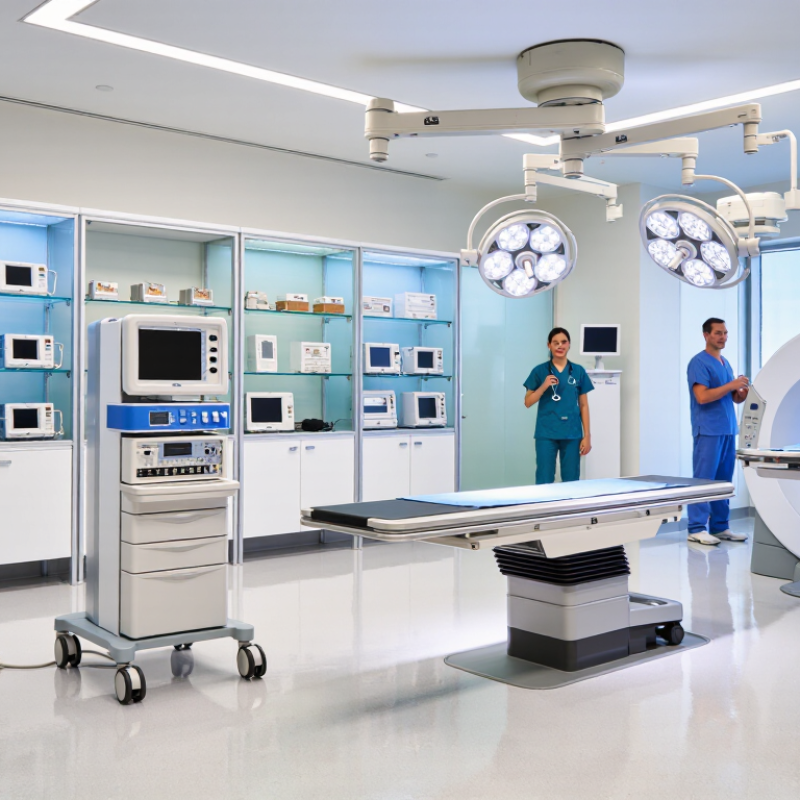
Global Medical Equipment Suppliers: An Industry Overview
Top Medical Equipment Suppliers Worldwide?
Global medical equipment suppliers support hospitals, clinics, laboratories, and home-care providers across diverse markets. Their products include diagnostic systems, monitoring devices, surgical tools, rehabilitation equipment, and essential consumables. A reliable supplier offers more than a catalog. It provides verified specifications, clear documentation, installation guidance, and responsive technical support.
Quality assessment should begin with regulatory compliance and manufacturing controls. Buyers should review certification records, product traceability, warranty terms, and service response times. Independent testing data can strengthen confidence, especially for equipment used in intensive care or diagnosis. Local maintenance capacity also matters. A technically advanced device is less useful when replacement parts require months to arrive.
Practical procurement involves careful questions. Can staff operate the system after realistic training? Does the supplier understand local voltage, language, and clinical workflows? Are software updates secure and manageable? Price remains important, but the lowest quotation may conceal training gaps or costly maintenance. A spreadsheet can look complete and still miss patient-safety risks. Our own evaluation may also favor familiar suppliers too quickly. Periodic audits, user feedback, and documented performance reviews help correct that weakness. Field demonstrations often reveal small problems, such as awkward controls, noisy alarms, or fragile cables, before they affect daily care.
Key Categories of Medical Equipment and Their Applications
Medical equipment suppliers serve hospitals, clinics, laboratories, and home-care providers worldwide. Their product ranges usually cover several practical categories.
Diagnostic equipment includes ultrasound systems, X-ray units, patient monitors, and electrocardiographs. These tools help clinicians identify disease, track vital signs, and guide treatment decisions. Accuracy matters, but workflow matters too. A technically excellent device can still cause delays when staff training is weak.
Surgical and life-support equipment supports operating rooms and critical-care units. Surgical tables, anesthesia machines, infusion pumps, ventilators, and sterilization systems require careful maintenance. Each device has a specific application and risk level.
Rehabilitation equipment, such as mobility aids and therapy units, helps patients regain strength after injury or illness. Laboratory analyzers also play an important role. They process blood, urine, and tissue samples under controlled conditions.
From practical experience, calibration records and service response often matter as much as the purchase price. This is easy to underestimate.
Tips:
Match equipment to patient volume, clinical skills, facility space, and local regulations. Check training materials before ordering. Ask about preventive maintenance, spare parts, software updates, and emergency support. A small clinic may need compact equipment with simple controls. A teaching hospital may require advanced systems and stronger data integration. Always verify cleaning procedures and electrical safety requirements. Specifications can look impressive on paper. Real use may reveal limitations. Staff feedback should influence future purchasing decisions.
Leading Supplier Types Across Global Healthcare Markets
Top Medical Equipment Suppliers Worldwide?
Leading supplier types differ across global healthcare markets. Original equipment manufacturers remain central for imaging systems, operating-room equipment, and patient monitoring devices. They provide engineering control, regulatory files, software updates, and technical training. However, direct purchasing is not always practical. Regional distributors often manage customs, inventory, installation, and hospital relationships across fragmented markets.
Local service suppliers are equally important. They maintain sterilizers, oxygen systems, diagnostic equipment, and backup power units near the point of care. This matters in areas where replacement parts may take weeks to arrive. The WHO Global Atlas of Medical Devices reported that 70–95% of medical devices in many low- and middle-income countries are imported. That dependence increases the value of reliable distributors and local maintenance teams.
Contract manufacturers support suppliers that need scalable production without owning every factory. Procurement groups and public-sector framework suppliers help hospitals negotiate volume pricing and standardize equipment. OECD Health at a Glance 2023 reported average health spending of 9.2% of GDP across OECD countries in 2022, creating strong demand for cost-controlled sourcing. Yet price alone can mislead. WHO guidance has noted that up to 70% of medical equipment may be non-functional in some settings, often because training, maintenance, or spare parts were overlooked. A supplier can deliver excellent equipment and still fail operationally. Buyers should examine service response times, calibration records, cybersecurity controls, user training, and total ownership costs. Perfect supplier rankings are unrealistic. Local evidence matters more.
Factors for Evaluating International Medical Equipment Suppliers
Top Medical Equipment Suppliers Worldwide?
Evaluating an international medical equipment supplier requires more than comparing prices. WHO’s Global Report on Assistive Technology states that over 2.5 billion people need at least one assistive product, with demand expected to reach 3.5 billion by 2050. This growth increases pressure on suppliers to provide stable production, regional service, and dependable replacement parts. Ask for evidence. Review manufacturing capacity, delivery records, complaint handling, and spare-part availability. A low quotation means little when a monitor remains unused because one sensor is missing.
Regulatory control should be checked country by country. Confirm product registration, risk classification, clinical documentation, and post-market surveillance procedures. ISO’s 2023 Survey recorded more than 30,000 ISO 13485 certificates worldwide. However, certification alone does not prove consistent performance.
Audit reports, corrective-action records, calibration logs, and staff training reveal more. In practical procurement work, I would also test response times using a small technical question. Slow or vague replies may predict difficult support later.
Financial resilience matters too. Request audited financial information, insurance details, warranty terms, and clear delivery conditions. The supplier should explain how it manages recalls, cybersecurity updates, and transport damage. Do not guess. Some evaluations still overvalue polished presentations and overlook local technicians. That is a weakness worth admitting. A supplier may meet every document requirement yet fail during a night-shift breakdown. Site visits, reference checks, and sample inspections can expose that gap before a hospital commits to a long contract.